
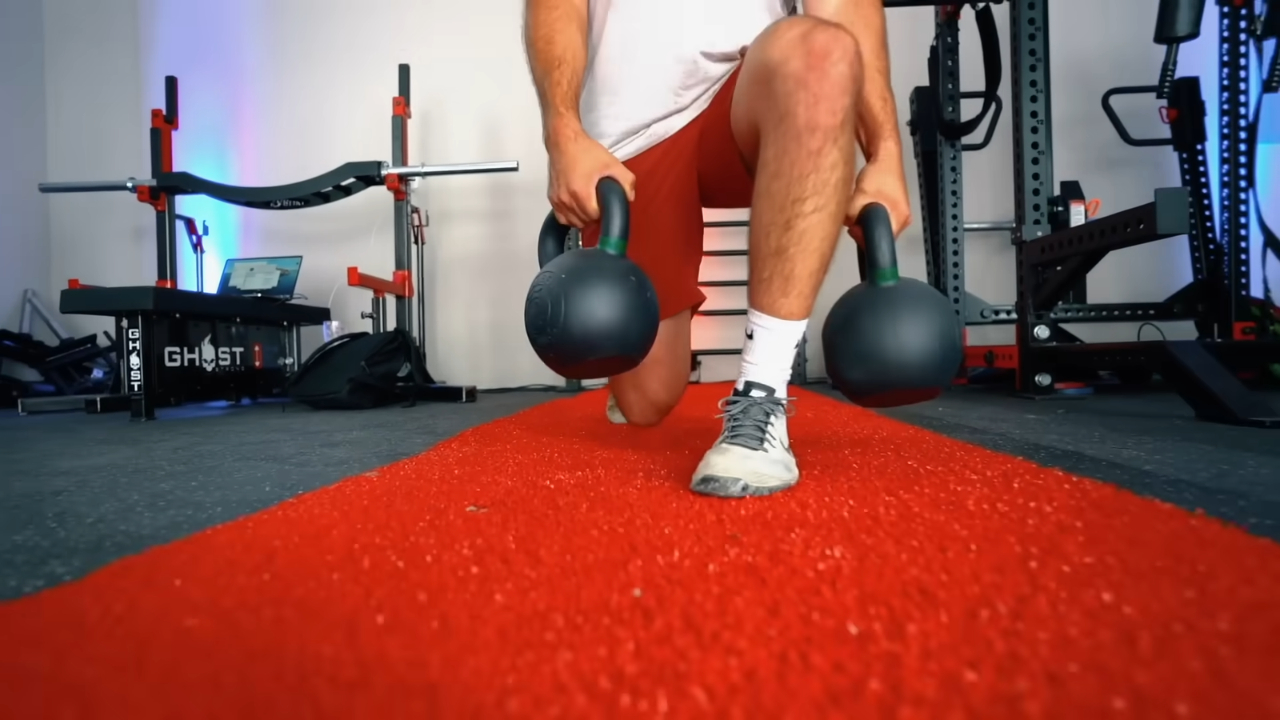
People rarely ask me which floor to buy. They ask why their knees ache during floor work, why the mat slides on the carpet or why the spare room smells like a tire shop. Those questions are all about home gym flooring, even when nobody uses the term.
The short answer is that the right home gym flooring depends on what you do on it. Dropped weights need dense rubber, and dumbbells you set down gently can live on thinner tiles.
If most of your training happens on your back or your knees, comfort matters more than toughness. Below, I help you work out which group you are in.
Start With What Happens on the Floor
Before I suggest anything, I ask a few questions. Your answers change the advice more than any product list does, and you can answer them alone in two minutes.
- Will weights ever be dropped, or always set down?
- How much of your training happens lying down or kneeling?
- What is underneath, carpet, wood, tile, vinyl or concrete?
- Does the flooring need to come up again for guests or a move?
Someone doing slow dumbbell work and lots of floor exercises needs different home gym flooring from someone swinging kettlebells three times a week. A renter who must leave the floor untouched has different limits from a homeowner with a basement slab.
Your answers decide the material, the thickness, and whether you need a protective layer. If you are still planning the room itself, a step-by-step home gym setup puts the floor early for good reason.
Rubber Tiles, Rolls, Stall Mats and Foam Compared
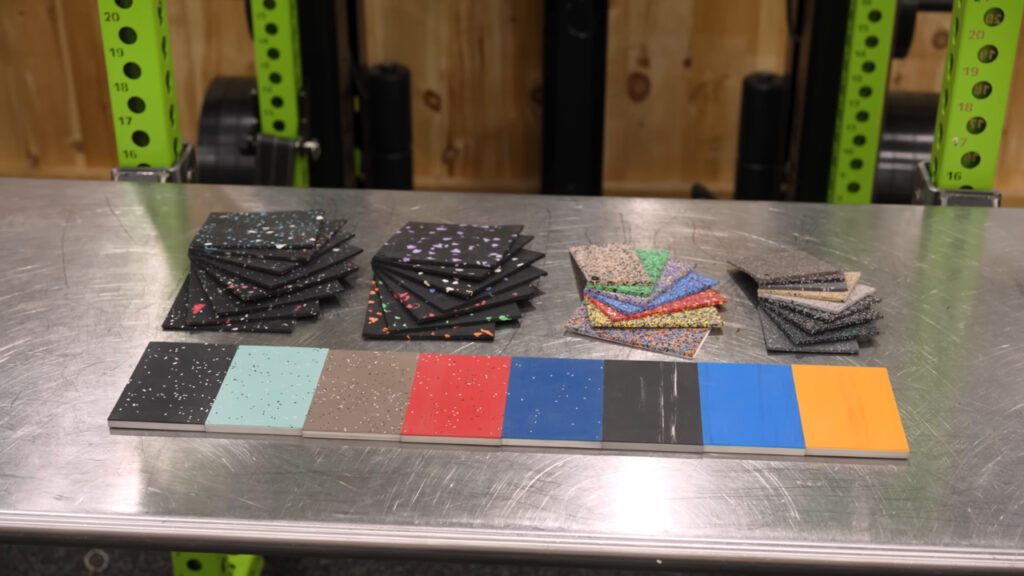
Four materials cover most home gym flooring. Each does one job well and brings one problem with it. The table sums up how I think about them for a home rather than a commercial gym.
| Material | Best for | Watch out for |
| Interlocking rubber tiles | Dumbbells, odd-shaped rooms, renters | Seams that lift if tiles are thin |
| Rubber rolls | Large, open rooms with few seams | Heavy to carry and hard to cut |
| Stall mats | Heavy lifting on concrete, tight budgets | Weight, smell and stiff edges |
| Foam tiles | Floor work, stretching, bodyweight | Dents and tears under weights |
The best flooring for home gym use in a rented bedroom is rarely the same as in a garage. Stall mats in particular divide people, and whether stall mats are worth the weight depends on how heavy you lift and who carries them.
How Thick Should Home Gym Flooring Be?
Thickness follows the hardest thing that will hit the floor. The figures below are my starting points for a home, not a manufacturer standard, and they assume dense rubber rather than soft foam.
- About 3/8 inch for bodyweight work, bands and light dumbbells that are set down
- About 1/2 inch for heavier dumbbells, kettlebells and a bench
- About 3/4 inch or more where weights may be dropped, often with a platform
Density matters as much as thickness. A thick foam tile feels soft under your knees, but a dumbbell sinks into it and leaves a dent. Dense rubber barely moves, so it protects the floor and keeps you steady during a lunge.
The best flooring for home gym training often combines the two. Rubber goes where weights land, and an exercise mat sits on top for floor work.
Protect the Floor Underneath
Home gym flooring protects you, but it also has to protect the floor below. Wood can dent under a bench foot or a dropped plate, and tile can crack.
Some vinyl and laminate floors react badly to rubber backing, so ask the maker of your floor before you lay rubber directly on it. On wood or vinyl, a layer of plywood under the rubber spreads the load and keeps the rubber off the finish.
Upstairs, home gym flooring also has a noise job, and training in an apartment without noise complaints starts with mass and a soft layer under the hard one.
Concrete is the easiest floor to protect and the hardest on your body. A slab can take far more abuse than wood, and setups for a one-car or two-car garage show how the floor fits around the car.
Laying Flooring Over Carpet
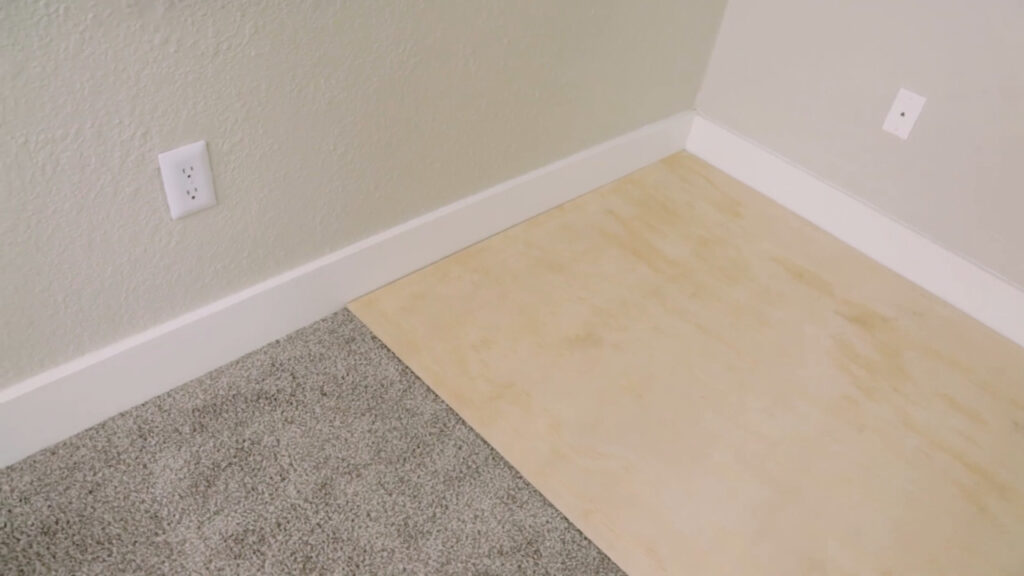
Carpet is the trickiest base for home gym flooring, and many renters cannot remove it. Rubber placed straight on thick carpet tends to shift and rock during lunges and step-ups.
Low-pile carpet is more forgiving than deep pile. The best flooring for home gym setups over carpet starts with something rigid, and here is the order I would follow.
- Lay a sheet of plywood or a rigid board as a flat base
- Put interlocking rubber tiles on top, so the edges lock together
- Add an exercise mat for floor work
- Keep the area away from doorways, so edges are not kicked loose
- Lift and check the carpet every few weeks for flattening or damp
The board does most of the work. Without it, the rubber simply follows the carpet.
Smells, Edges and the First Month
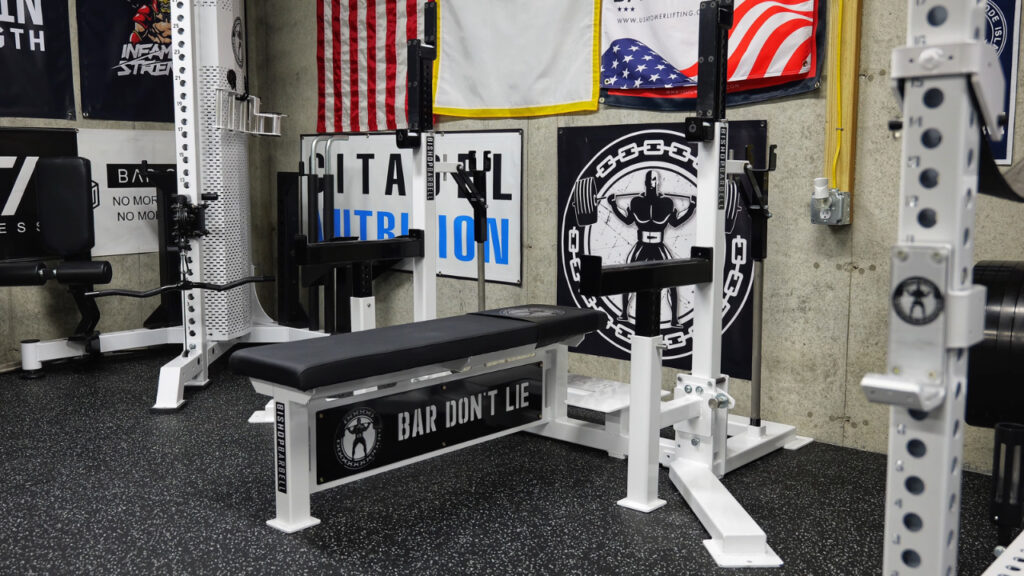
New home gym flooring often smells, especially recycled rubber in a warm, closed room. Airing the mats outside or in a garage for a few days usually helps, and ventilation is the first fix.
Did you know? In its July 2019 report on recycled tire crumb rubber used on sports fields, the EPA found that chemicals were present as expected but human exposure appears to be limited. The agency also stated that the report is not a risk assessment.
Edges are the other thing beginners notice, because a curled tile corner is easy to catch with a toe. For anyone returning to exercise later in life, that matters. The CDC notes that more than one out of four older people falls each year, so flat, tight edges are part of safe home gym flooring.
Floors for Floor Work After Pregnancy
Mothers often bring me their core questions, and one pattern keeps coming up. Someone was told to “just do planks” and spent weeks on a hard floor with aching wrists, unsure what she was feeling in her stomach.
The home gym flooring was not the main problem, but it made every session harder. For early floor work, a thick exercise mat lets you lie, kneel and breathe without bracing against hard ground. The best flooring for home gym sessions at that stage is the one you are happy to lie on for twenty minutes.
Watch what you feel, too. The NHS explains how to check the gap between your stomach muscles and suggests seeing a GP if it is still obvious 8 weeks after birth. Doming along the midline, leaking or a heavy feeling in the pelvis are worth raising with a pelvic floor physiotherapist.
Choose After One Session, Not Before
View this post on Instagram
Before you order home gym flooring, put the mat you already have where you plan to train and do one ordinary session. Notice where your knees hurt, where the mat slid, and where you hesitated to set a dumbbell down.
Then match those notes to the table. Sore knees point to a softer top layer, a sliding mat points to a board or locking tiles, and fear of dropping points to dense rubber.
I have seen three short sessions on a comfortable floor stick when one long session on a cold, hard one did not, so choose the home gym flooring you will want to come back to.