
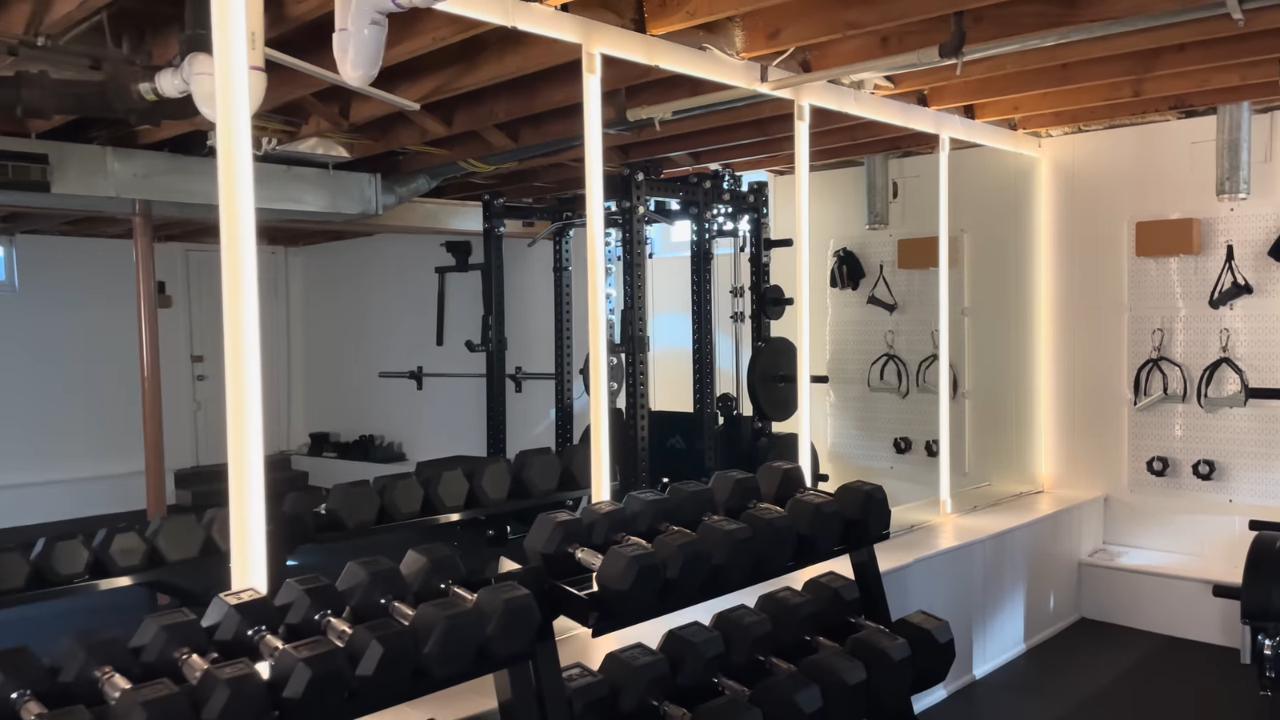
The first thing I do in a basement is reach up. Before anyone talks about racks or rowers, I stand under the lowest duct with my arms straight overhead and measure the gap with a tape.
That one number decides more about a basement gym than the budget does.
Basements have real advantages. They are quiet and out of the way.
They also come with damp air, low beams, cold concrete and very little daylight. The basement gym ideas below deal with each of those in order, and every limit comes with a swap, so the training still works.
Test for Water and Radon Before You Plan Anything
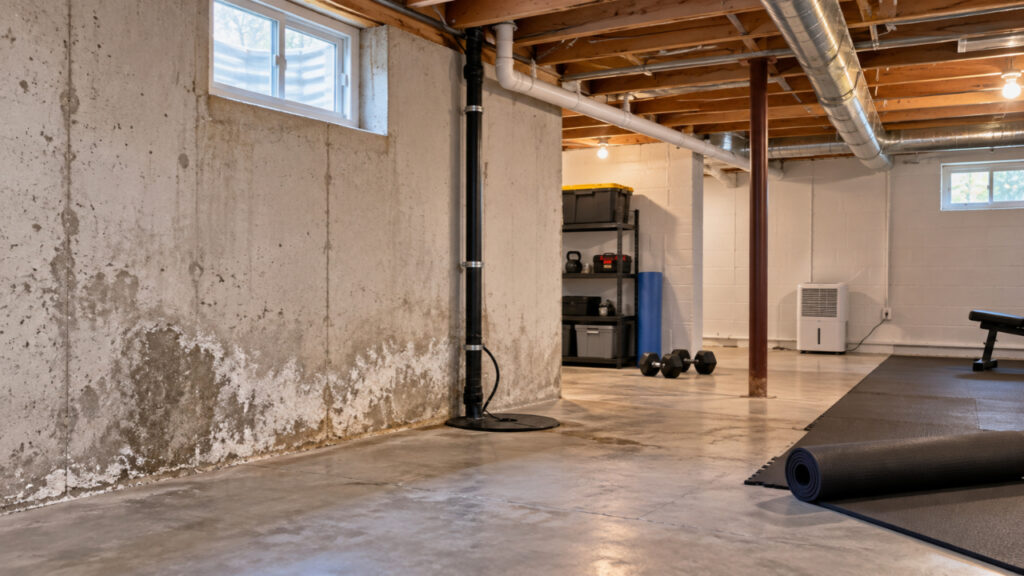
Good basement gym ideas start with two tests, not a shopping list. Water comes first.
Look for damp patches, white mineral marks on the walls, and a musty smell after rain. If water gets in, fix the drainage before you put down a single mat.
Radon is the second test, and it matters more once you spend hours a week down there. The EPA guide to radon reduction says to retest in the lowest lived-in area after you remodel, and it mentions converting an unfinished basement into living space as one of those changes.
EPA guidance says to fix your home if radon is confirmed at 4 picocuries per liter of air (pCi/L) or higher, and to consider fixing it between 2 and 4 pCi/L.
Both tests are cheap compared with any piece of gym equipment, and either result can change the whole plan.
Dry the Air Before You Buy Equipment
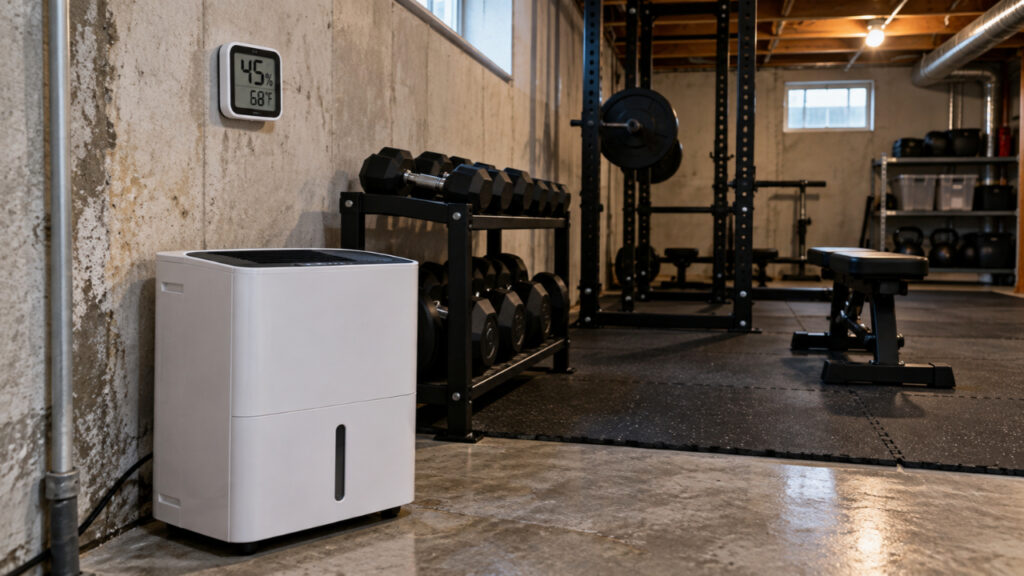
Damp air is the problem most basement gym ideas skip. Bars rust, rubber smells, and cardboard boxes go soft. It also makes a hard session feel worse, because sweat does not dry and the room feels heavy within ten minutes.
The EPA advises keeping indoor humidity below 60 percent, ideally between 30 and 50 percent, and suggests a dehumidifier when needed. Before you build a home gym in basement space, run the dehumidifier for a week and watch the numbers.
- Put a hygrometer at chest height in the training area, not near the furnace
- Check it in the morning and after a workout, since your breath and sweat add moisture
- Empty or drain the dehumidifier daily until you know how fast it fills
- Keep plates, dumbbells, and mats off bare concrete
If the reading will not drop below 60 percent, sort the moisture before you add anything else.
What a Low Ceiling Rules Out
Low ceilings are where basement gym ideas meet reality. A City of Boise handout on the International Residential Code explains that habitable rooms need a ceiling height of at least 7 feet (2.13 m), while basement beams and ducts may project down to 6 feet 4 inches (1.93 m). Compare your reach with the lowest point, not the average ceiling.
| Movement | What to check | Swap if it does not fit |
| Standing overhead press | Arm reach plus the dumbbell above your hands | Seated or half-kneeling press, landmine press |
| Pull-ups | Head clearance above the bar, feet clear of the floor | Inverted rows, band pulldowns, one-arm rows |
| Jump rope, box jumps | Rope arc and jump height | Step-ups, bike intervals |
In a home gym in basement rooms, swapping the press is not a step down. A seated press still trains the shoulders, and you keep the goal while changing the exercise.
Equipment That Fits Under Beams and Ducts
View this post on Instagram
The most useful basement gym ideas pick equipment by height as well as footprint. Short racks and squat stands exist, but check the manual for the overall height and leave room to rack the bar without catching a duct. If no rack fits, adjustable dumbbells cover squats, presses, rows and hinges.
A treadmill deck lifts you higher, and running adds bounce, so a tall person can end up close to the beams. A bike or rower keeps your head low, which is why it shows up in so many basement gym ideas.
Did you know? Flooring eats ceiling height. A 3/4-inch rubber mat under a beam at 6 feet 4 inches leaves about 6 feet 3 1/4 inches of clearance, so measure again after the mats go down.
Move from seated to half-kneeling presses once three sets of ten feel steady.
Put a Floor Between You and the Concrete
Concrete is cold, hard and sometimes damp underneath. Of all the basement gym ideas I see online, a thin yoga mat on bare concrete fails fastest.
The floor needs to protect the slab, keep your knees warm during floor work and let moisture escape rather than trapping it.
For most people I suggest dense rubber mats under the lifting area and something softer where you stretch and do core work. If the slab tends to feel damp, raised subfloor panels under the mats help keep the training surface dry. The right mix of floor layers that suit a concrete slab depends on how much you lift.
Whatever you choose, lift a corner after a month. If the concrete underneath is wet, or the rubber smells sour, the moisture problem is not solved yet. Fix that first, then put the mats back down.
Light the Room Like a Gym
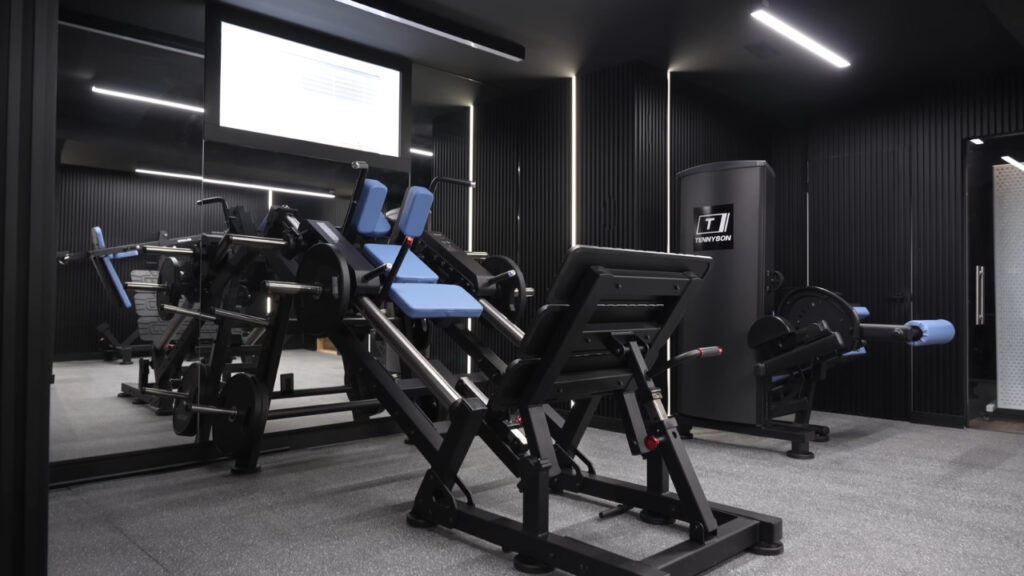
Most basements have one bulb near the stairs and a dark corner where the gym ends up. Poor light makes the room feel like storage, and it makes it harder to see your feet, the plates and your position. Light is one of the cheapest basement gym ideas with an obvious payoff.
I would plan for light from more than one direction, so your own shadow does not cover the floor in front of you. The basics of lighting that makes a room feel awake are simple.
- Bright, even overhead light across the whole training area
- No single bulb directly behind where you face during a set
- Fixtures mounted flush or recessed, so a bar or dumbbell cannot hit them
Low ceilings make the last point important. A hanging pendant over a lifting area is an accident waiting for an overhead press.
Keep the Air Moving
Among basement gym ideas, ventilation is the one people forget until summer. A basement holds stale air, and a workout makes it worse.
You breathe harder, sweat more and add heat to a small space. A fan pointed across the training area and a window or vent that opens make a bigger difference than most people expect.
A home gym in basement space often shares the room with the furnace and water heater, and those need attention. The CDC recommends that you have your heating system, water heater and other fuel-burning appliances serviced every year, install battery-operated carbon monoxide detectors near sleeping areas and check the batteries each spring and fall.
A quick note on placement. Keep equipment, mats and storage boxes clear of the furnace and water heater. A basement gym should never block access for a technician or the airflow those appliances need.
Lay Out Zones So It Feels Like a Real Gym
The best basement gym ideas come down to layout, because that is the difference between a basement with equipment in it and a real gym.
Commercial gyms feel organized because every area has one job. Borrowing that idea costs nothing, and it works even in a small room.
- Lifting zone under the highest part of the ceiling, on the thickest mats
- Cardio zone near the fan or vent
- Stretching zone on a softer surface, away from the furnace
- Storage along the walls, heavy items low
- A clear path from the stairs to each zone
I keep a mobility routine before bed, and the stretching corner is where a home gym in basement space earns its keep on rest days. The order here mirrors a full home gym plan that starts with the room, with damp and ducts added.
Your First Week Underground
@everydayhartsWhen the gym has no power and social media is down, apparently I become productive 😂 I’ve been talking about putting together a little home gym in the basement for months, and today was finally the day! She’s small, but she fits the space perfectly! Now I’m thinking maybe a neon sign above the dumbbell rack? 👀 I will 🔗 everything in stories!♬ original sound – Lindsay Hart
Before you spend money on basement gym ideas, do three things this week. Test for radon, put a hygrometer in the room, and run a dehumidifier for seven days. Then stand under the lowest beam and measure your reach with a dumbbell in each hand.
Those numbers tell you which basement gym ideas fit your room. A dry room with 7 feet of clear height can take a short rack and standing presses.
A damp room with low ducts needs the moisture fixed and seated presses from day one. Either way, your first session can happen on a mat with one pair of dumbbells.