
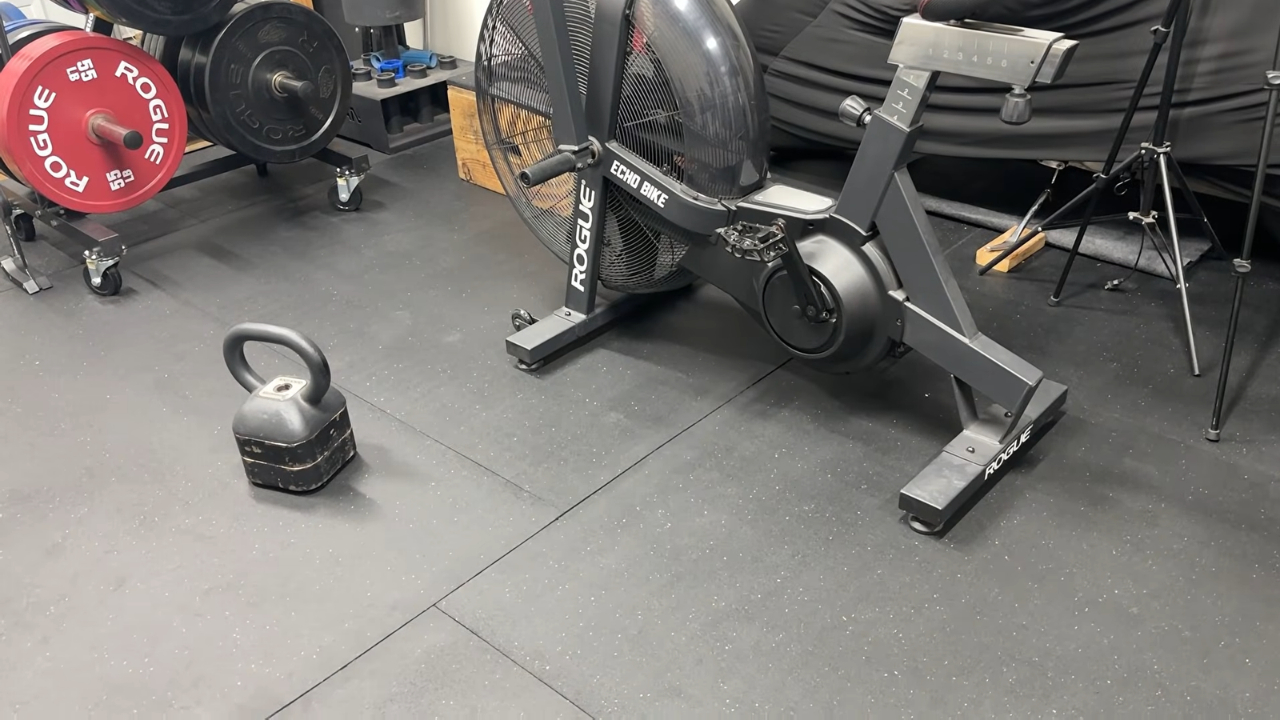
The first stall mat lesson usually happens in a parking lot. Someone buys four mats at a farm supply store, walks out to the car, and finds out what a single mat weighs. The plan for an easy Saturday installation ends right there.
Horse stall mats for home gym floors are a good choice for many people, and I like them for heavy lifting on concrete.
They are dense, tough, and usually cheaper than gym tiles. They are also heavy, stiff and smelly at first. Below is what to expect, from carrying them home to cutting the last piece.
Why Lifters Started Using Stall Mats
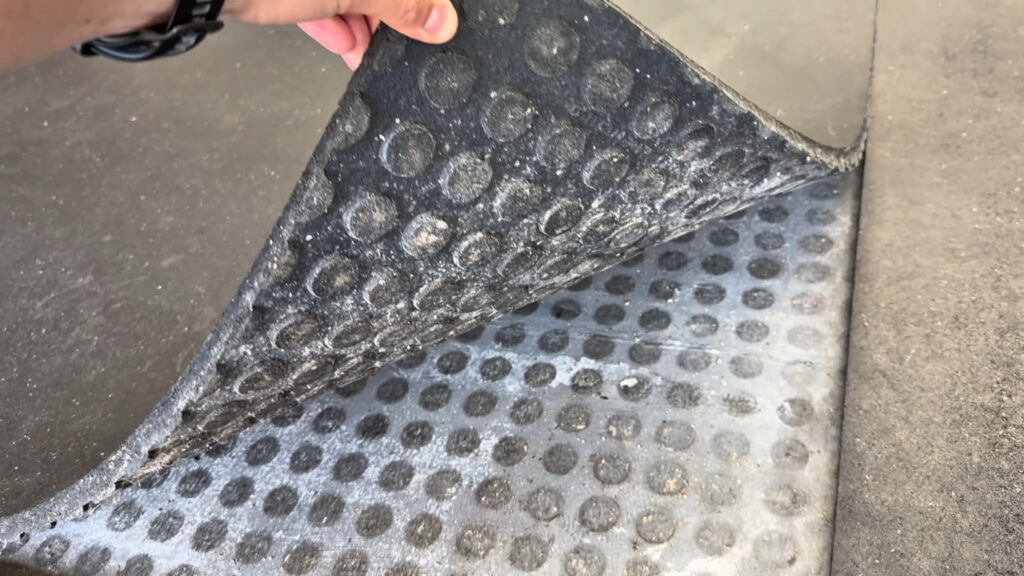
Stall mats were made for horses, which is exactly why horse stall mats for home gym floors suit lifters. A horse is heavy, shifts its weight all day, and is hard on a floor, so the mat has to cushion without breaking down.
Penn State Extension describes rubber stall mats as durable enough to withstand a lot of abuse, with many companies offering warranties of 10 years or more. It lists the most common thicknesses as 1/2 to 3/4 inch, and notes the mats are easy on legs and low maintenance.
Penn State Extension also lists the drawbacks. The mats are heavy and cumbersome; they move unless walls or interlocking pieces hold them, and untextured mats are slippery when wet.
Those strengths and weaknesses carry over to horse stall mats for home gym use. A dropped dumbbell is not a horse, but the mat handles both the same way.
Size, Weight, and Why They Are Hard to Move
A typical stall mat is 4 by 6 feet, and Penn State Extension notes that a mat that size weighs about 100 pounds. That figure is the reason I talk about carrying horse stall mats for home gym use before lifting on them.
For comparison, the NIOSH lifting guidance says the maximum weight to lift with two hands, under ideal conditions, is 51 pounds. A stall mat is roughly double that, and it is floppy, wide, and hard to grip.
Plan on two people for every mat, or a hand truck for the trip from the car to the room. Lift with a partner, agree on the route before you pick it up, and walk it in rather than throwing it. If you train alone and have nobody to help, interlocking rubber tiles weigh far less per piece and may suit you better.
How Many Mats Your Room Needs
Each 4 by 6 foot mat covers 24 square feet, which turns planning horse stall mats for home gym floors into simple arithmetic. I ran the numbers for common training areas using the 100-pound figure from Penn State, so the weights are estimates rather than measurements.
| Training area | Square feet | Mats needed | Approximate total weight |
| 6 x 8 ft lifting spot | 48 | 2 | 200 lb |
| 8 x 12 ft single-car corner | 96 | 4 | 400 lb |
| 12 x 12 ft spare room | 144 | 6 | 600 lb |
| 12 x 18 ft garage bay | 216 | 9 | 900 lb |
The dimensions in the table divide evenly by 4 and 6 feet, so no cuts are needed. A room that does not divide evenly means cutting, which is where most of the work goes.
Odd-shaped rooms are one reason mats are not always the best flooring for home gym spaces.
Getting Them Home and Into the Room
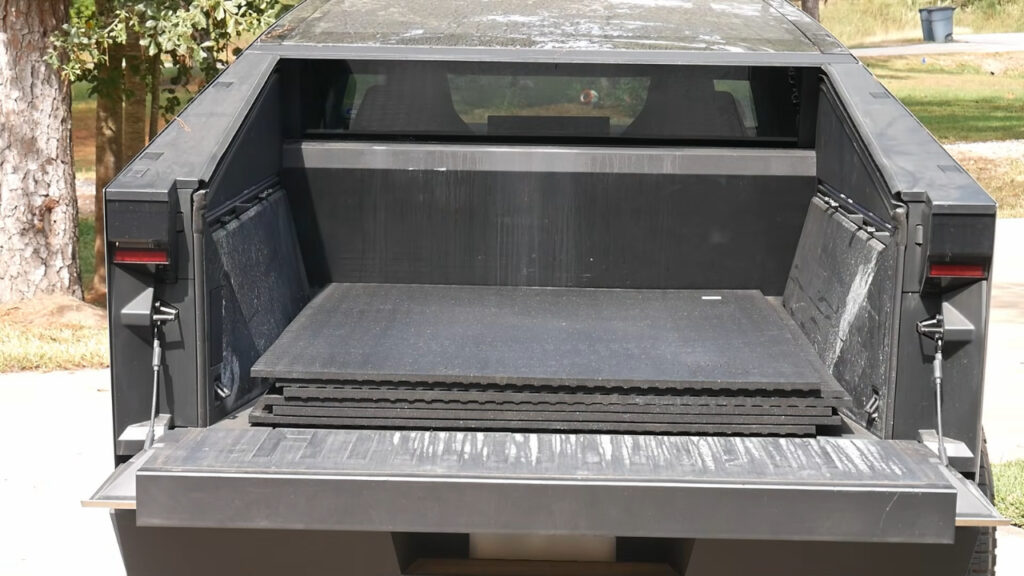
Farm supply stores are the usual place to buy horse stall mats for home gym floors, and that is part of their appeal. They are sold for barns, not gyms, which is a big part of why lifters went looking for them. Call ahead, because many stores keep only a few in stock.
- A pickup truck or trailer, since four mats will not fit in most car trunks
- A hand truck or furniture dolly for the walk from the curb
- A second person for every lift
- Gloves, because the edges are rough
Slide mats on their long edge through doorways rather than carrying them flat.
Ten steps down to a basement with a 100-pound mat is a different job from rolling one across a garage floor. Delivery costs money, so add it in before deciding whether stall mats really are the best flooring for home gym budgets.
The Smell and How to Air It Out
New stall mats smell like rubber, and in a closed room the smell can be strong for the first few weeks. The smell fades with air and time, so the trick is to give them both before they come indoors.
I would leave horse stall mats for home gym use outside or in an open garage for several days, standing on edge so air reaches both sides. A wash with mild soap and water, then a full dry in the sun, often helps more than sprays. Once they are inside, a fan and an open window do the rest.
Did you know? Penn State Extension notes that stall mats may retain odors, and that the base should be grooved to drain urine that leaks through the joints. In a home gym, those grooves face the floor, so let any washed mat dry completely before you lay it down.
Cutting and Fitting Them
Cutting horse stall mats for home gym layouts is slow, but it is not complicated. The trick is many shallow cuts, not one heroic one. Here is the order I use.
- Lay the mats in place and mark the cut line with chalk
- Put a long straightedge or a level along the line
- Score the line with a sharp utility knife, then repeat in the same groove
- Bend the mat back as the cut deepens, so the gap opens and the blade moves freely
- Change blades often, because rubber dulls them quickly
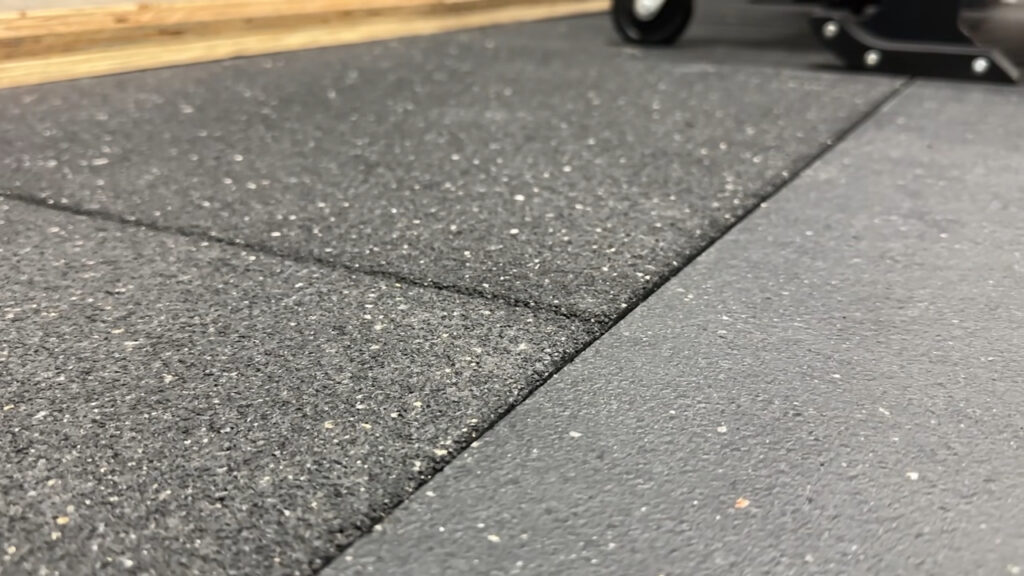
Push the mats tight together once they are cut. Penn State Extension notes that mats move unless walls or interlocking pieces hold them, so tight joints and a wall on at least one side keep the floor from creeping apart under heavy use.
View this post on Instagram
Where Stall Mats Fall Short
Horse stall mats for home gym floors are not right for every room. They do not interlock, so the edges can shift and lift slightly over time. They are heavy enough to be a problem on an upper floor, and the smell is a real issue in a bedroom.
The textured top on many mats can also catch fabric and feel rough under knees. In a spare room or apartment, the best flooring for home gym training may be lighter interlocking rubber tiles, with a foam mat on top for floor work.
The choice comes down to comparing rubber, foam and tiles for home training against the room you actually have.
For heavy lifting on concrete, though, stall mats are hard to beat for the money. The best flooring for home gym lifting in a garage or basement is often the plainest one.
Garage, Basement or Spare Room
In a garage where the car still comes back in every evening, everything else in the gym has to fold or roll out of the way. Stall mats are the exception, laid once at the back of the bay and left there, and garage layouts that share space with the car usually have room for two or four mats.
In a basement, check the slab for dampness before you lay horse stall mats for home gym training, because rubber can trap moisture. In a spare room or corner, two mats under the lifting area may be all you need, and fitting training into one corner of a room rarely calls for wall-to-wall rubber.
Wherever the mats go, they come after the measuring and before the equipment. That is the order I use to set up a home gym, since nobody wants to move a rack twice.
Measure Tonight, Buy This Weekend
@thediylakehouseI’m installing horse stall mats in our home gym…here’s why! The button underside allows for ventilation to prevent mold, especially important if your gym is on concrete. They’re 3/4 inch thick heavy duty rubber made to handle horses, so dropped weights and heavy equipment aren’t an issue (each mat weighs 93lbs!) They’re great for traction, so you can feel confident doing any exercise. You can cut them to size with a utility blade no problem. Best of all they’re affordable! Each mat is about forty bucks at your local farm supply store. We used 8 mats here. Stay tuned for the equipment setup!♬ The Next Episode – Instrumental – Dr. Dre
Before you drive to the store for horse stall mats for home gym use, measure your training area and divide it by 24 to find how many mats you need. Round up if the room does not divide evenly, and plan where each cut will fall.
Then line up the help. One extra person, a hand truck, and a vehicle that can take the load make the difference between a two-hour job and a ruined weekend.
Once the horse stall mats for home gym training are down and aired out, your first session on them can be as simple as squats, rows, and presses with one pair of dumbbells.