
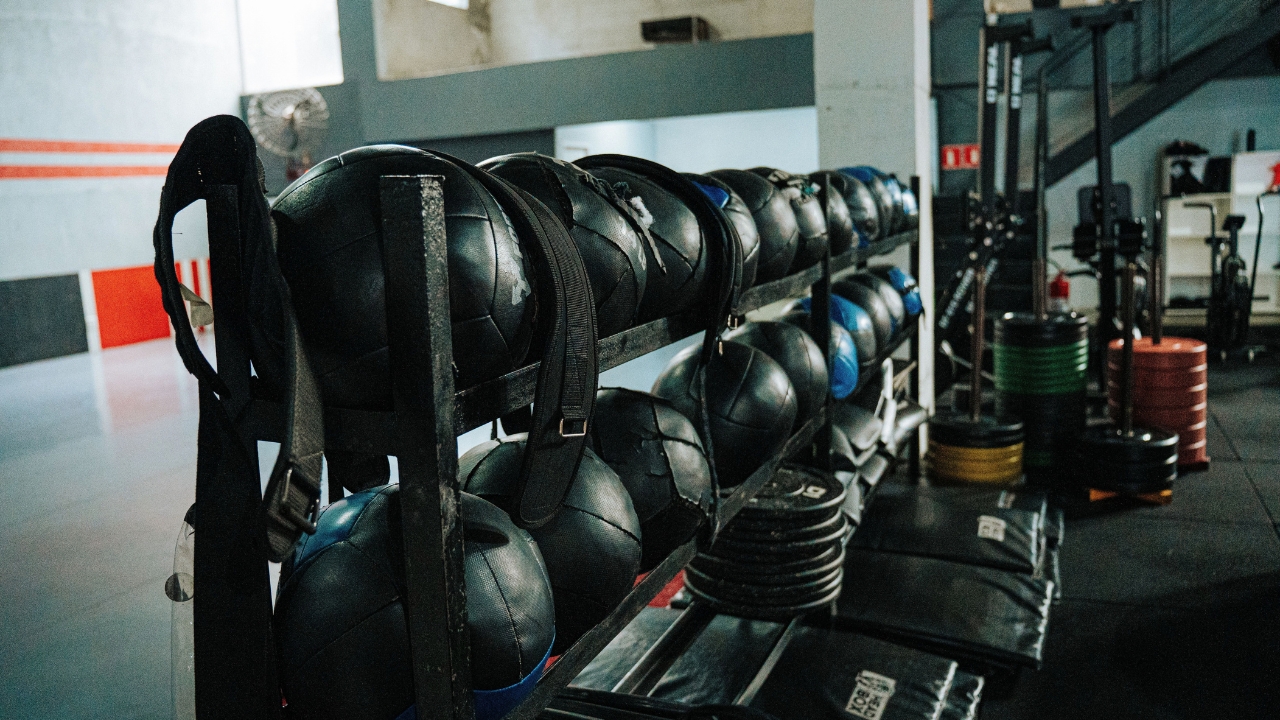
As a personal trainer, I like a well-equipped gym because the right machines and weights give you more ways to train. But I also know you don’t need a garage full of equipment, or even much space, to get a proper workout.
If your garage is small, I’d rather help you choose a few useful pieces and build the exercises around the space you have. Dumbbells, bands, bodyweight movements, a bench, or even a clear patch of floor can be enough.
So, stop treating limited space as an excuse and build a setup that matches how you actually want to train.
Start with the garage you actually have
Measure the space you can actually use after the car, freezer, shelves, bikes, tools, and garage door have taken their space. I learned that lesson helping someone plan a setup that looked generous on paper. Once we marked where the car doors opened, half our proposed training area disappeared.
- Measure the usable space, including ceiling height and the room needed to move around equipment.
- Choose the main goal, such as strength, general fitness, conditioning, or a mixture.
- Set the spending limit first, then decide which equipment deserves part of it.
The CDC currently recommends adults combine aerobic activity with muscle-strengthening work, so a good garage doesn’t have to be exclusively a lifting room or cardio room.
12 garage gym ideas for different spaces and budgets
The right setup depends on how much room you can spare, what you want to train, and how much you want to spend. These 12 ideas cover everything from very small garage corners to full strength setups.
1. Bodyweight and resistance band garage gym

I’d start here if the budget is tight or the garage still has to function as a garage. I once coached a beginner in a space where the only permanent training equipment we could leave out was a mat.
Everything else had to disappear into a plastic box after the session. We still had squats, lunges, push-ups, rows, presses, trunk work, and several ways to progress them.
A simple setup could include:
- A training mat
- Several resistance bands with different resistance levels
- A secure band anchor
- A small step or sturdy bench if space allows
I’d rather give a beginner those few tools and a decent progression plan than fill the garage with cheap equipment that does one job each.
2. Adjustable dumbbell garage gym
View this post on Instagram
Adjustable dumbbells are usually one of my first suggestions when somebody shows me a narrow garage. A full dumbbell rack can eat up wall space quickly, while one adjustable pair gives us several loads without turning the room into equipment storage. More importantly, I can build most of a strength session around them.
I’ve had sessions where the planned equipment wasn’t available, and dumbbells ended up covering almost everything. We used Romanian deadlifts instead of barbell deadlifts, goblet squats instead of rack squats, floor presses instead of bench presses, then finished with rows and carries. Nobody lost anything important from the session.
For roughly 50 to 80 square feet of clear space, I’d much rather have adjustable dumbbells and room to move than six machines squeezed together.
3. Suspension trainer setup for a very small garage
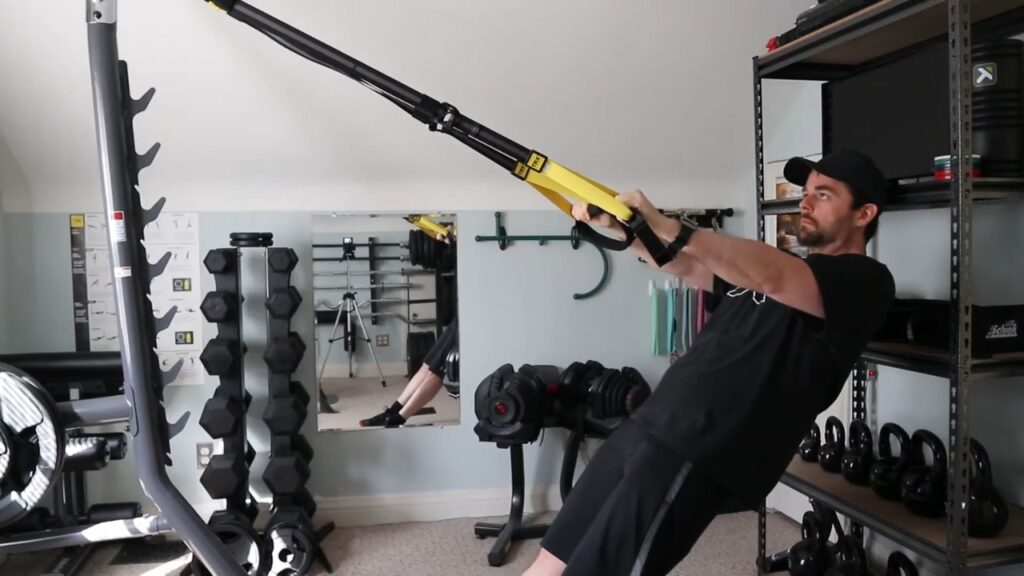
A suspension trainer earns its place when the floor needs to stay mostly empty. Once it is attached to an appropriate anchor according to the manufacturer’s instructions, the straps can be stored against the wall after training. During the session, changing your body position can alter the difficulty without changing plates or fetching another weight.
I use that a lot with people who are learning. Someone struggling with a full bodyweight movement may be able to control a supported variation much better. Someone stronger can move their feet and make the same basic exercise harder.
Space note: the anchor itself occupies very little room, but you still need clear floor in front of it. Measure the exercise area, not just the equipment footprint.
That last point catches people out surprisingly often when planning small home gyms.
4. Fold-away bench and dumbbell setup
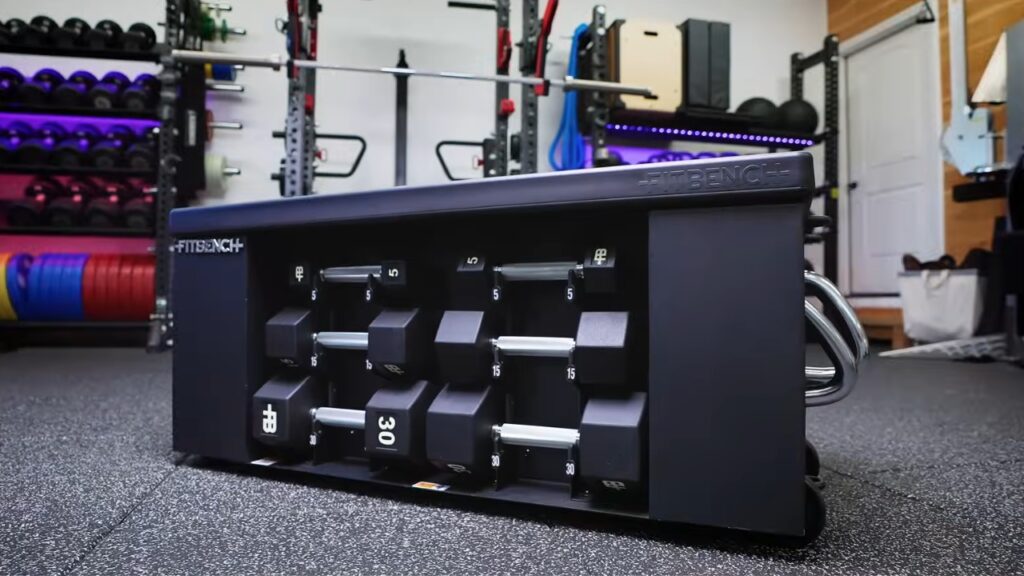
I like benches. I don’t like benches becoming garage furniture that everyone has to walk around. In a narrow room, I’d choose a bench that can be moved easily or stored vertically after the workout, then pair it with dumbbells rather than building several fixed stations.
One of my home clients used to slide his bench against the wall after every session because the same section of floor was needed for bikes later in the day. That small habit meant the gym never became a source of arguments about lost garage space.
With the bench out, we had presses, supported rows, seated shoulder work, split squats, step-ups, and plenty of dumbbell exercises. With it stored, we had floor space again. Around 60 to 90 square feet can work well when the layout stays simple.
5. Kettlebell training corner
@garagegymguy If you’re training at home, the soft design just makes more sense. You still get kettlebell swings, squats, presses and core work without a hard iron bell banging into your floor or forearms. #TikTokShopCreatorPicks #tiktokshopstockup #MERACH #KettlebellWorkout #HomeGym ♬ original sound – Brody | Garage Gym Guy
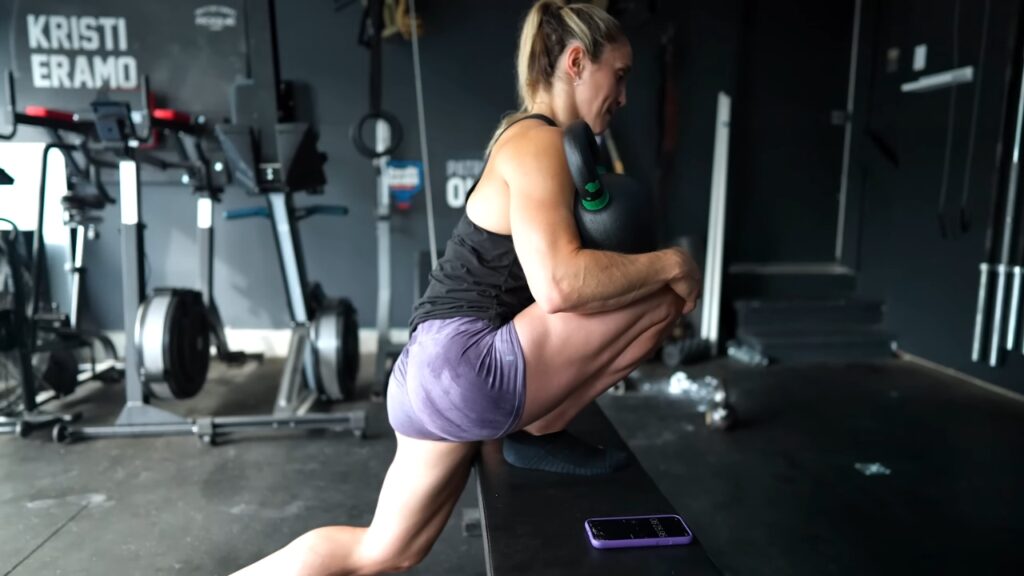
Kettlebells make sense when somebody wants strength and conditioning but doesn’t want a rack taking over the garage. I would start with one or two loads that match the exercises you currently perform. Buying a complete row of kettlebells before you know what you need is usually money spent on decoration.
I remember changing one session because the garage had boxes stacked where I expected to train. We ended up using a single kettlebell for goblet squats, Romanian deadlifts, presses, rows, and carries. It wasn’t the workout I had written down, but it still covered the movements I wanted.
Did you know? Carries are particularly useful in garage training because they don’t require another station. Even a short clear lane can become useful training space if turning around safely is easy.
6. Dumbbells and an adjustable bench for general fitness
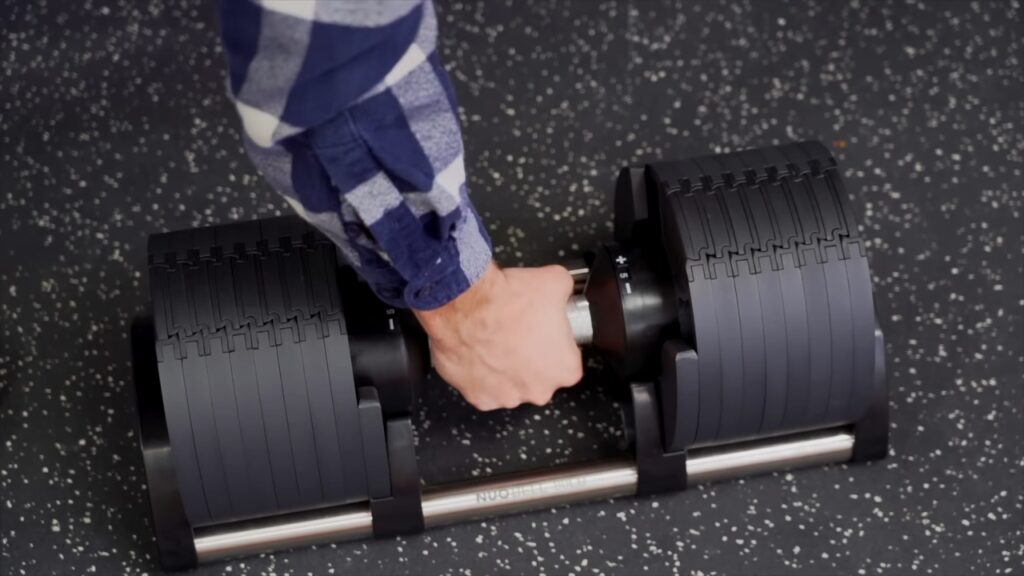
If somebody gives me a medium-sized garage, a reasonable budget, and no desire to specialize in powerlifting or endurance training, I often end up here. Dumbbells, an adjustable bench, open floor, and a little storage cover a huge amount of training without making the room complicated.
I’d use the setup for people who want to:
- Build general strength with presses, rows, squats, lunges, and hinges
- Add short conditioning circuits without moving heavy equipment
- Train several times per week without spending half the session setting up
I’ve found that general fitness clients often benefit more from fewer stations used consistently than from endless exercise choices. Around 80 to 120 square feet gives me enough room to change exercises without constantly reorganizing the garage between sets.
7. Compact squat stand for strength training
Someone who tells me strength is the main goal gets a different answer. I’d rather devote the budget to a solid barbell setup than buy a treadmill, several small accessories, and a collection of equipment that doesn’t help the primary goal. A compact squat stand can work well when a full rack would dominate the room.
The mistake I see is measuring the stand and assuming that is the space requirement. The bar extends beyond it. Plates have to go on and off. A bench may need to move underneath. You need enough room to step around everything safely.
I once shifted a planned rack position several feet after realizing the lifter would have been loading one end of the bar almost against a shelving unit. On paper it fit. In an actual session it would have been irritating every single week.
8. Mixed strength and cardio garage gym
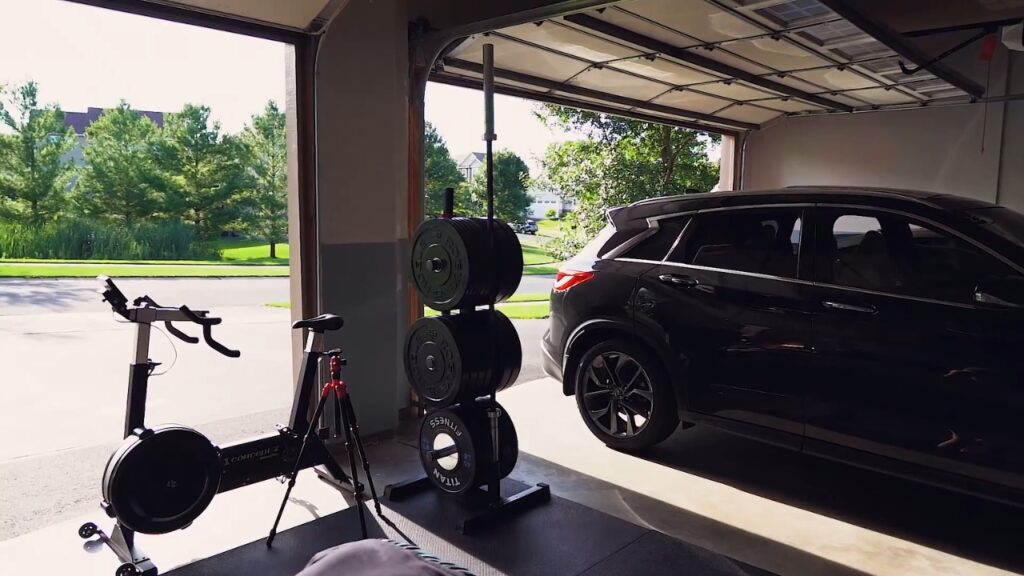
I don’t think someone interested in fat loss automatically needs a garage full of cardio equipment. Strength training still belongs in the plan, while aerobic activity can come from several places.
The current CDC guidance for adults calls for at least 150 minutes of moderate-intensity aerobic activity each week, or an equivalent amount of vigorous activity, alongside muscle-strengthening work on at least two days.
In a medium garage, I’d split the room mentally rather than physically. One side handles lifting. Another handles conditioning.
- Dumbbells or a compact rack for strength
- One bike, rower, or treadmill if you genuinely enjoy using it
- Open floor for circuits, skipping, or bodyweight work
If you choose a Concept2 Rower, allow roughly 9 by 4 feet of clear workout space, even though the machine itself is smaller.
One cardio machine you actually use beats three machines slowly disappearing under coats and boxes.
9. Open-floor gym with a weighted vest
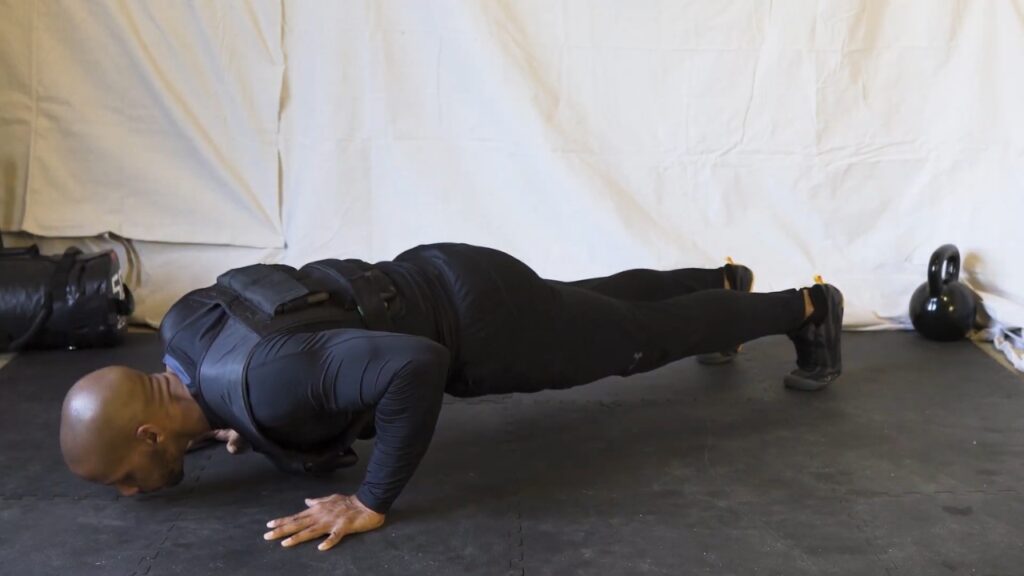
Some garages are better left open. If you already walk, use stairs, perform bodyweight training, or exercise outside as well, a weighted vest can increase loading without adding a permanent station.
Add bands, a mat, perhaps dumbbells, and suddenly the garage can change purpose from one session to the next.
I like that flexibility when someone trains around family routines. One person I coached needed the garage completely clear again after every morning session. Fixed machines made no sense. A vest, bands, and dumbbells could all go back onto the same shelving unit before breakfast.
I would introduce additional vest load gradually rather than wearing it for every movement simply because it is available. More load should serve the exercise. I don’t add weight just to make somebody tired. The training effect still needs a reason.
10. Rack and barbell garage gym
View this post on Instagram
A proper rack becomes much easier to justify when you have over 150 square feet of clear training space and barbell strength is genuinely important to you. I build this kind of garage from the center outward. Rack first. Then barbell, plates, bench, and storage. Accessories come later.
Before you install a rack, choose the right garage gym flooring to protect the concrete beneath heavy weights. A level surface also helps keep the rack stable.
Priority
What I would add
First
Rack or suitable squat stand, barbell, plates
Second
Bench and organized plate storage
Third
Dumbbells, bands, or other accessories based on actual training needs
I’ve seen the reverse approach too many times. Somebody owns five specialty attachments but still has an awkward basic lifting area. Build around the movements you expect to train every week, then let accessories solve real problems that appear later.
11. Two-person garage gym
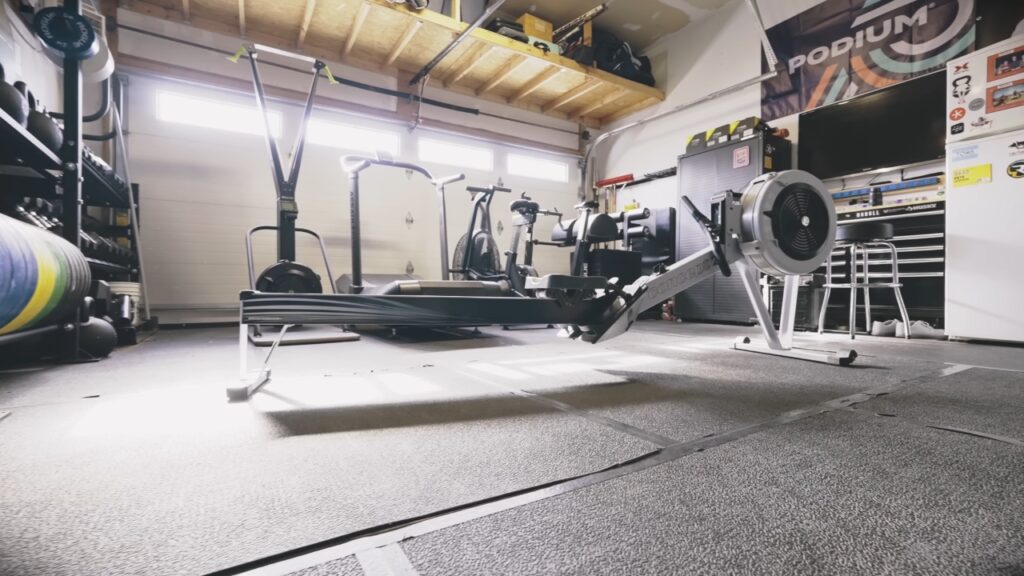
Two people training together do not need two copies of everything. I look for the moments where both people need the same station at the same time, then solve those bottlenecks. In many cases, a second pair of dumbbells is far more useful than a second rack.
I used to run sessions where I deliberately paired exercises around the equipment available. One person would squat at the rack while the other performed dumbbell presses. Then they changed stations. Neither person spent the session standing around waiting for a bench.
For a shared garage, I’d prioritize:
- Two clear exercise areas that can operate safely at once
- Enough weight options for both people
- Storage that makes changing stations quick
- A layout where one person never has to cross another person’s lifting area
12. Full garage gym with separate training zones
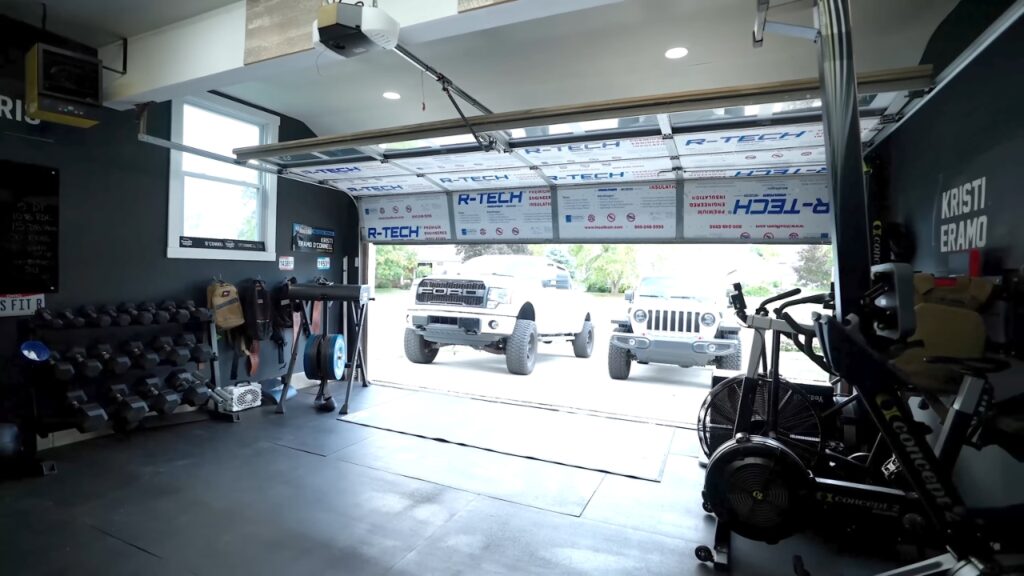
If the entire garage is available, I still don’t fill every empty section. I like leaving a large piece of floor deliberately unused. Open space gives me somewhere to warm up, lunge, carry weights, perform mobility work, run circuits, or change an exercise when the original plan isn’t working.
I would usually create four loose zones: rack and barbell, free weights, conditioning, and open floor. Storage belongs around the perimeter rather than creeping into the middle.
Did you know? The piece of equipment I most often wish people had less of is equipment itself. I’ve coached in beautiful home gyms where changing one exercise was difficult because every square foot had something sitting on it. A larger budget should buy better options. It shouldn’t automatically buy more objects.
Use your budget to solve the biggest problem first
I use budget ranges as planning bands, not promises about current retail prices. Used equipment, shipping, brands, and weight capacity can change the final cost considerably. The question I ask is what purchase improves the training most.
Planning budget
Where I would start
Best match
Under $250
Bands, mat, one useful form of resistance
Small spaces and beginners
$250 to $600
Dumbbells or kettlebells, bench, storage
General home training
$600 to $1,200
Wider weight range, bench, floor protection, compact strength setup
Regular strength and fitness training
$1,200+
Rack, barbell, plates, bench, storage, then conditioning equipment
Dedicated garage gyms
I normally leave part of the budget untouched initially. Four weeks of actual workouts will tell you more about what the room needs than another evening looking at equipment online.
Remember that a garage is still a garage
Temperature and vehicles change how I treat a garage compared with a spare bedroom. Hot conditions deserve attention because the CDC warns that exercising in heat increases the risk of dehydration and heat-related illness. Its guidance recommends pacing activity, drinking more water than usual, and stopping if you feel faint or weak.
The full EPA carbon monoxide guidance says a vehicle should never be run inside a garage. I also check the garage-door path, lighting, floor condition, and clear routes around equipment before worrying about another training accessory.
Let your workouts tell you what to buy next
I wouldn’t try to finish a garage gym in one weekend. Build enough of it to train, then pay attention.
If you keep wishing for heavier dumbbells, that tells you something. If the bench is constantly in the way, that tells you something too.
I’ve changed enough workouts in real time to know that the original plan rarely deserves blind loyalty. The goal matters more.
Your garage should work the same way. Give yourself enough room to move, buy equipment that supports the training you genuinely do, and let the next month of sessions decide what earns the next piece of floor space and the next part of your budget.