
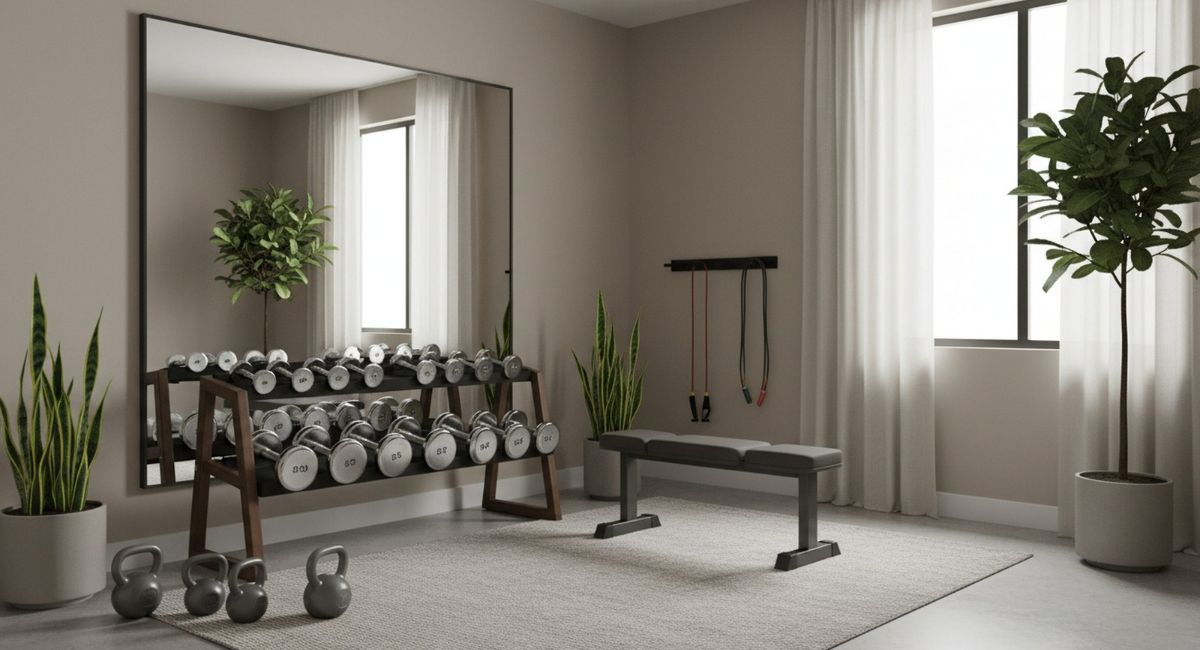
One question about mirrors stays with me. A mother told me she had noticed a ridge of doming along the middle of her stomach during a sit-up, felt frightened and stopped exercising altogether.
She asked whether she should have been watching herself more closely all along.
The short answer is that a home gym mirror is useful for some people and unhelpful for others.
It can show your position and make a small room feel bigger, but it can also pull your attention away from how a movement feels.
Below is what trainers and studies say, and how to hang one safely if you decide you want it.
What a Mirror Is Actually Good For
A home gym mirror is a feedback tool. It shows you where your body is during a movement, which helps when you are learning something new and nobody is there to watch.
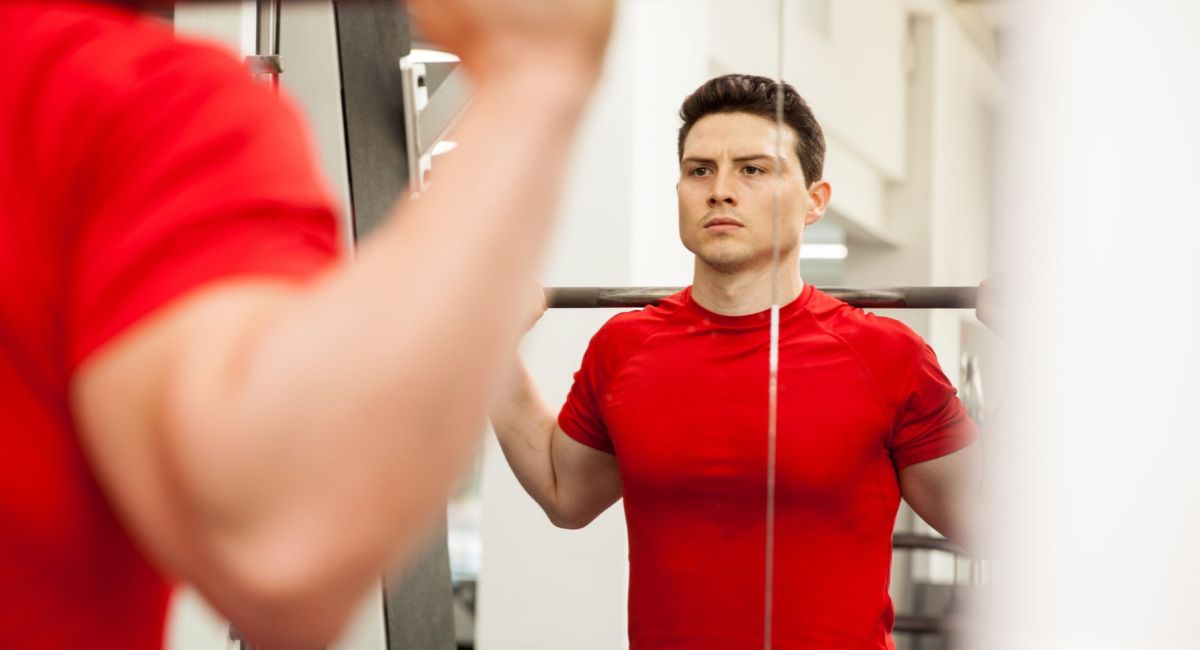
The trick is knowing what it can and cannot show.
- Knee position during squats and lunges, seen from the front
- Whether your hips stay level during a single-leg exercise
- Shoulder height during presses and rows
- Squat depth and back angle, but only from the side
Straight ahead, a mirror flattens everything. You see width, not depth, so a rounded back or a shallow squat looks fine. A mirror on a side wall, or your phone propped on a shelf, shows much more.
Not every coach is a fan. Strength gym owner Tony Bonvechio told Slate in 2023 that mirror feedback “can actually take away from the learning process” because it comes too quickly.
Choosing the right mirror involves more than finding one that fits your wall. Size, quality and price all matter. In the video below, TailgatingChallenge shares their experience choosing a mirror for a home gym and explains what they considered before buying.
Mirrors and Core Work After Pregnancy
The mother I mentioned earlier did not need more watching. She needed someone to explain what she was seeing. Doming along the midline can occur with diastasis recti, and it is worth taking seriously without becoming afraid to move.
The NHS describes diastasis recti as the two long stomach muscles separating during pregnancy, and explains how to check the gap with your fingertips. It suggests seeing a GP if the gap is still obvious 8 weeks after birth.
A home gym mirror on a side wall can help here. It lets you watch the shape of your stomach during gentle core work, so you notice doming and adjust the exercise if needed. If you see persistent doming, experience leaking or notice a heavy feeling in the pelvis, a pelvic floor physiotherapist can assess your symptoms and guide your exercise choices.
Making a Small Room Feel Bigger
The second reason people want a home gym mirror is space. A mirror reflects light and creates the impression of extra depth, which matters when you train in the same small spot every day. A room that feels less cramped is easier to walk into on a tired evening.
Placement makes the difference. A mirror opposite or beside a window bounces daylight back into the room.
Put it where it reflects the open part of the room, not the stack of boxes or the laundry rack. Many small home gym ideas that make a corner work use a tall, narrow mirror for exactly that reason.
Did you know? In the Slate report, gym owner Morit Summers explained that she kept large mirrors out of her own gym to make it feel safe and less intimidating. “Fitness does have that very narcissistic side to it,” she said.
Glass, Acrylic and Where Weights Swing
A home gym mirror sits in a room where things move fast. A dumbbell slips, a kettlebell swings wide or a band snaps back.
Regular glass breaks into sharp pieces, so the material and the placement both matter.
If you’re considering adding a home gym mirror, it helps to see what to look for before buying one. In the video below, Chicken Home Gym shares practical advice on choosing mirrors for a home workout space.
- Safety-backed glass: A film on the back helps hold broken pieces together if the glass breaks.
- Acrylic mirrors: These are lighter and less likely to shatter than ordinary glass, though they scratch more easily.
- Safe placement: Keep the mirror out of the path of swings, jumps and anything you press overhead.
I would leave at least the length of your arm plus the length of the weight in clear space between the mirror and where you train. Never place a mirror directly behind where a kettlebell swings backward. Ask the seller what a home gym mirror is made of before you pay.
Mounting It So It Stays Put
A heavy mirror leaning against the wall may seem fine in a bedroom. In a home gym, it needs to be fixed securely.
The floor shakes when weights go down, and children and pets brush past it.
A home gym mirror also takes more knocks than a bathroom mirror, so adhesive pads alone are not enough unless the manufacturer explicitly specifies an appropriate adhesive-only installation system.
- Identify the wall construction and locate suitable structural fixing points.
- Choose mirror clips or a mounting system rated for the mirror’s weight and compatible with the wall.
- Install the bottom supports according to the manufacturer’s instructions, using appropriate anchors or structural fixings.
- Secure the top retainers so the mirror cannot tip or move away from the wall.
- Check that the mirror is stable and that normal gym activity does not loosen its fixings.
If the mirror is large or heavy, or you rent, ask a glazier or qualified installer. A good home gym mirror is worth the extra care it takes to hang properly.
Try Your Phone Before You Buy
Before you spend money on a home gym mirror, prop your phone on a stable shelf and film one ordinary set of squats from the side. Watch it back and ask yourself two questions. Did you learn something about your position, and did you feel better or worse watching yourself?
If the video helped and you felt fine, a side home gym mirror may be worth considering. If you felt worse, skip the mirror and keep the phone, which can show the side view anyway. Neither method replaces feedback from a qualified trainer when you need help learning proper technique.
Either way, planning your workout space from the ground up leaves room to add a mirror later.