
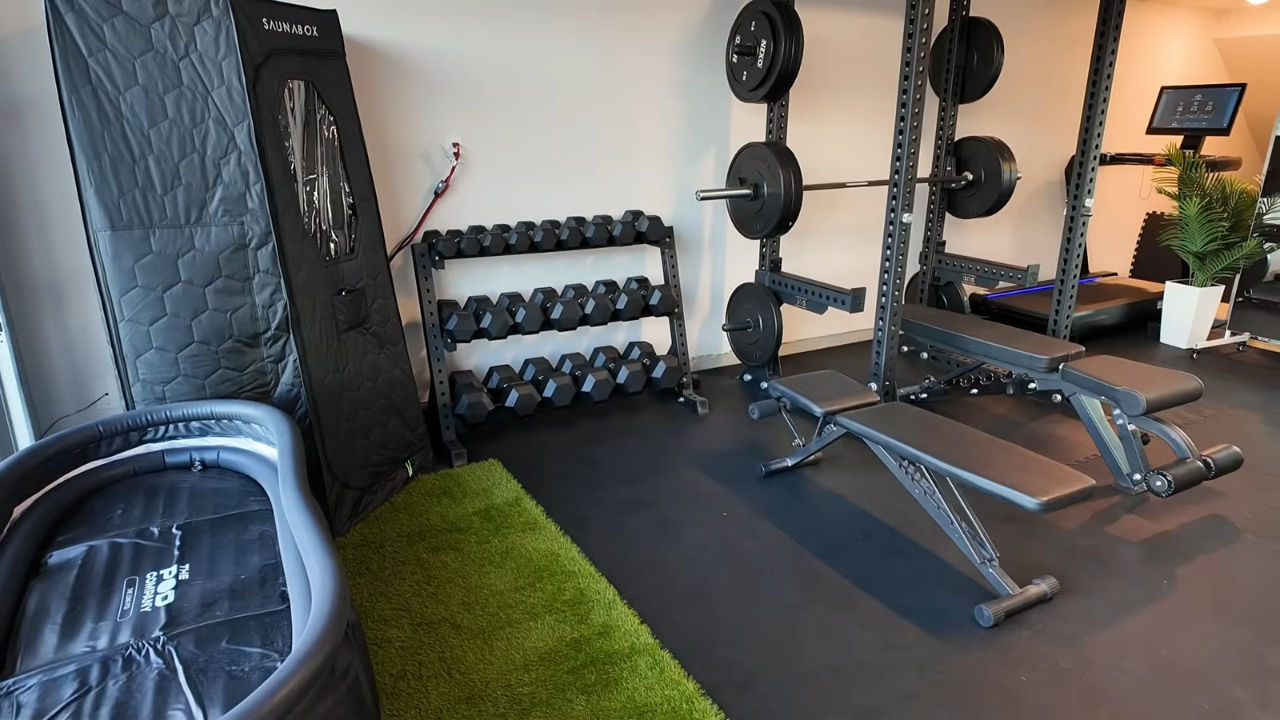
When someone asks me for small home gym ideas, I ask the same thing I ask before writing a meal plan. What does your week look like, and what do you already have?
A mother with a baby asleep in the next room and twenty minutes to spare needs a different corner from someone who trains after work every evening.
The good news is that the most useful small home gym ideas need only one corner, and one corner is enough for full-body strength training. A mat, a set of bands, a pair of adjustable dumbbells and a few hooks on the wall can cover most of what a beginner needs.
A whole spare room calls for a different order of work, and setting up a home gym from an empty room starts with flooring and measurements rather than hooks.
Plan the Corner Around Movement, Not Equipment
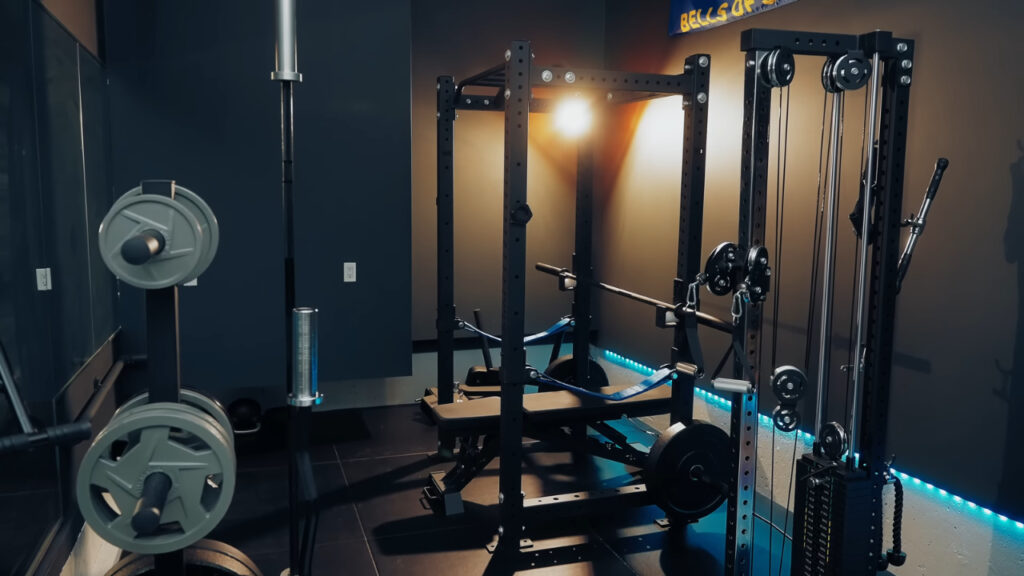
Most small home gym ideas start with what to buy. I start with how much space your body needs when it moves, because equipment can fold away and your arms cannot.
Lie on a mat with your arms stretched overhead, then out to the sides. Step back into a lunge and swing your arms. Mark the floor at the furthest point each time.
That is your real footprint, and it is usually bigger than people expect, because your arms and legs reach well past the edges of the mat.
Here is how I match small home gym ideas to corner sizes. The figures are my own working estimates for one adult of average height, not a standard.
| Clear floor | What it fits | What it does not |
| About 4 x 6 feet | Mat work, bands, dumbbell rows, squats and presses | Lunges with long strides, a bench |
| About 6 x 6 feet | Everything above, plus lunges and a folding bench | Swinging a kettlebell safely near furniture |
| About 6 x 8 feet | A full dumbbell routine, step-ups and light kettlebell work | A barbell or a rack |
Check the ceiling only if you plan to press overhead or use a pull-up bar. For everything else, the floor and the nearest piece of furniture decide what works.
Bands and Adjustable Dumbbells Do the Heavy Lifting
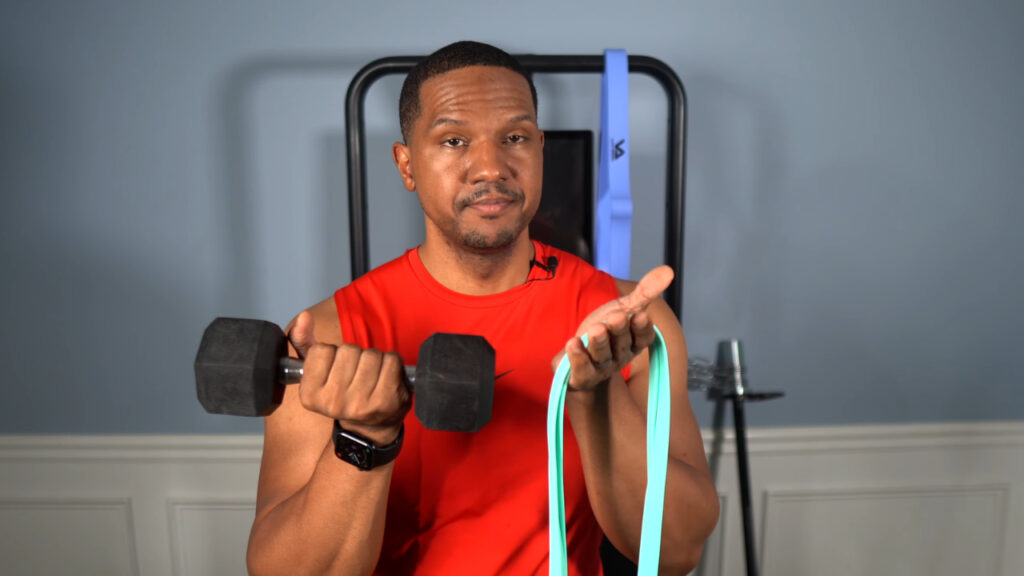
Resistance bands take up almost no space, and they work better than many people think. A 2019 review in SAGE Open Medicine compared elastic resistance with weights and machines across eight studies. It was a small review, but it found similar strength gains, with neither method coming out ahead for the arms or legs.
The reason bands work is the way tension changes. A band pulls hardest when it is most stretched, so a row or a press gets harder toward the end of the movement.
To make an exercise harder: step further from the anchor point, shorten your grip or move to a thicker band. I keep two or three strengths in a corner gym, because one band is almost always too easy for legs and too hard for shoulders. For beginners, bands are the first of my small home gym ideas, since they are cheap, quiet and easy to store.
Adjustable dumbbells solve the other half. A full set of fixed dumbbells from 5 to 50 pounds in 5-pound steps is ten pairs, or twenty dumbbells, and they need a rack. An adjustable pair covers a similar range in the space of two. Among small home gym ideas, that swap saves the most floor.
They do have limits. Changing the weight takes longer, the handles are bulkier at light settings, and not every model is built to be dropped, so check the instructions for yours. If you train with short rests between exercises, lay out your weights before you start.
Choose Equipment That Folds or Hangs
The best small home gym ideas leave the floor empty when you are done. A folding bench can stand upright behind a door. A thick mat rolls up and stands in the corner. A doorway pull-up bar comes down after each session.
Wall-mounted equipment, such as a fold-up bar or hooks for a suspension trainer, needs a solid fixing. The U.S. Consumer Product Safety Commission explains that studs in modern homes are spaced 16 or 24 inches apart and recommends a stud finder to locate them.
I would not hang my body weight from drywall plugs alone. If you rent, ask the landlord first, or choose a doorway bar that hooks over the frame without screws.
Store Everything Up the Wall
Of all the small home gym ideas here, vertical storage is the one that lets a corner stay a corner. When the session ends, everything should go back on the wall or into one low shelf in about two minutes.
- Hooks for bands, a jump rope and suspension straps
- A pegboard for smaller items you use every week
- One low, sturdy shelf for dumbbells and a kettlebell
- A basket on the floor for the mat, foam roller and towel
Keep the heaviest items at the bottom. In its July 2025 Anchor It update, the CPSC advised families to anchor bookcases and dressers to the wall and to put heavier items on lower shelves. A tall shelf with dumbbells on top is the kind of thing a curious toddler pulls over, and many corner gyms are in bedrooms and family rooms where small children play.
Use a Mirror to Open Up the Space
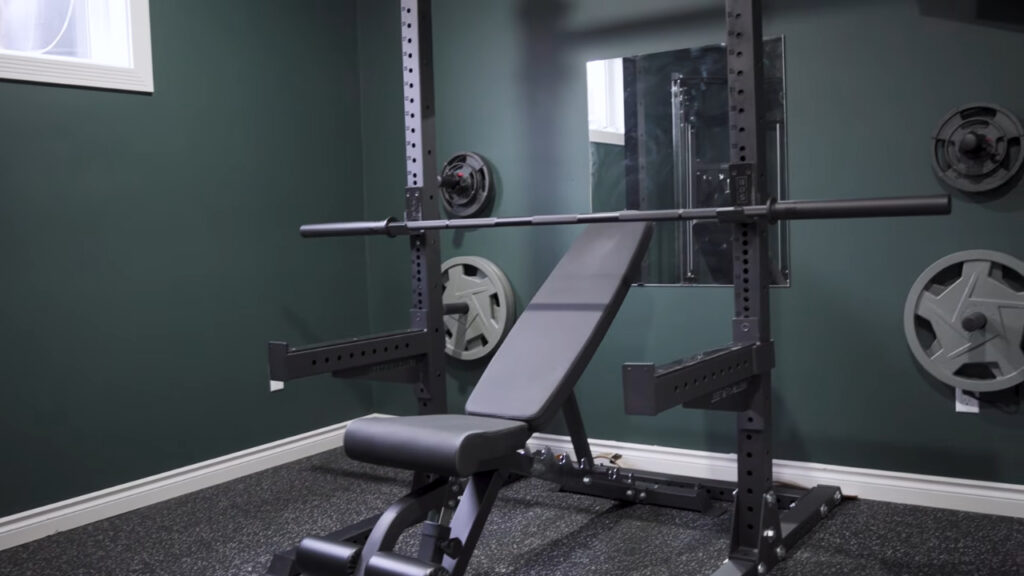
A mirror is one of the cheapest small home gym ideas for making a cramped corner feel larger. It reflects light and makes the space look deeper, which matters more than people expect when you train in the same spot every day.
I prefer a tall mirror on the side wall rather than straight ahead. From the side you can check how deep you squat and whether your back stays long in a row.
Fix it securely and keep it out of the path of a swinging dumbbell. Some people find a mirror distracting rather than helpful, and whether a mirror earns its place in a home gym depends a lot on how you feel training in front of one.
A Bedroom Corner for a Return After Pregnancy
Many of the mothers I work with train at home because leaving the house is the hard part. For them, I would apply these small home gym ideas to a bedroom corner and keep sessions to about twenty minutes, so they can stop the moment the baby wakes.
- A mat, two bands and a light pair of adjustable dumbbells
- Two hooks and one low shelf for storage
- Glute bridges, band rows and supported squats
Timing matters more than equipment here. The NHS says that after a straightforward birth you can start gentle exercise as soon as you feel up to it, and recommends getting advice at the 6-week postnatal check before any high-impact exercise. Recovery takes longer after a caesarean or a more complicated delivery.
Diastasis recti, the gap between the two stomach muscles, is common after pregnancy. The NHS explains how to check the gap with your fingertips, advises avoiding sit-ups, planks and high-impact exercise at first, and suggests contacting a GP if the gap is still obvious 8 weeks after the birth. I would want to hear what you are feeling before adding load to core work.
In a flat, the bedroom corner sits above another household. Slow tempo work and dumbbells lowered onto the mat are the simplest way of keeping the people downstairs on your side.
If you need more ways to control noise, a quiet apartment home gym starts with the right floor, low-impact exercises and a conversation with your downstairs neighbor.
Start With the Corner You Have
View this post on Instagram
Most small home gym ideas fail for one simple reason. The setup takes longer to unpack than the workout takes to finish. Put the mat where you can roll it out in seconds, hang the bands within easy reach, and leave one pair of dumbbells on the low shelf.
Good small home gym ideas grow from what you actually use. Ben would add a kettlebell next. I would add a second band and see how the first month goes. After four weeks, look at what you used every session and what stayed on the hook, and let that decide the next thing you bring into the corner.