
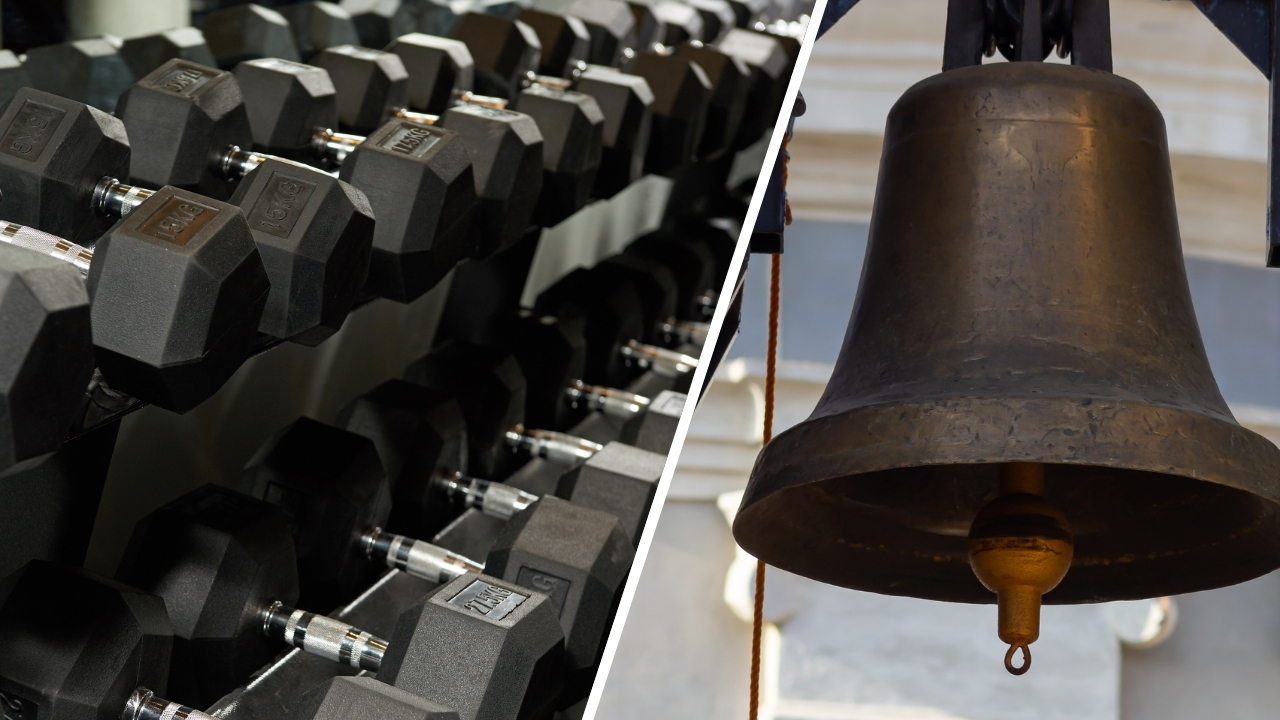
I spend a lot of time around dumbbells. What I had never given much thought to until I went looking into it was the name.
Why is a dumbbell called a dumbbell? It does not ring. It barely looks like a bell. And unless somebody drops one on the gym floor, there is nothing particularly noisy about it.
That last part is actually the clue. The name can be traced back to an exercise machine that copied the action of ringing a church bell without having an actual bell attached. It was, quite literally, a bell mechanism that stayed “dumb,” meaning silent.
Yes, church bells really are behind the name
The basic story is true, although the version passed around online often skips an important step. Modern dumbbells were not created because somebody took the clapper out of a hand bell and decided to start curling it.
The earlier “dumb bell” was a much larger piece of equipment. It imitated the mechanism and physical action involved in ringing a church bell. A rope could be pulled, a weighted mechanism would turn, and the person using it got the exercise without sending a bell ringing across the neighborhood.
Sport historian Jan Todd traces this development in her history of barbells, dumbbells and Indian clubs. The equipment changed considerably over time, but the old name managed to survive. That is why the small weight sitting beside your bench carries the memory of a much bigger machine.
The word “dumb” originally meant silent here
In “dumbbell,” the word “dumb” was being used in its older sense of unable to speak or make a sound. A dumb bell was therefore a silent bell.
Oxford University Press has discussed the same history in its explanation of the word dumbbell, noting that the earliest Oxford English Dictionary citation comes from 1711. That is well before the modern gym existed in anything like the form we would recognize.
- Bell: the movement copied the action of ringing one.
- Dumb: the apparatus made no bell sound.
- Dumbbell: the name eventually moved from the larger apparatus to handheld exercise weights.
So no, the name was never intended as an insult to the equipment. The weight was silent. That was the whole point.
Joseph Addison was using a dumb bell in 1711
View this post on Instagram
One of the best clues comes from writer Joseph Addison. In the July 12, 1711 edition of The Spectator, Addison described exercising for an hour each morning on a dumb bell kept in the corner of his room. He even joked that his landlady knew not to interrupt him while he was “ringing.”
That wording matters. He was not talking about standing in front of a rack and doing curls. He was pulling and working an apparatus closely associated with the movement of bell ringing.
In 1711, Addison described his exercise machine as working in “the most profound Silence.” That silence is the important part of the name.
For me, that is the point where this stops sounding like one of those suspicious gym facts somebody tells you between sets. We have an early written reference describing both the exercise and the silence that gave the device its name.
The original dumb bell was a serious piece of equipment
If you are picturing a pair of iron weights with little church bells on the ends, forget that image. Historical descriptions show something considerably larger.
A documented version used a wooden mechanism mounted above the exerciser, with a rope wrapped around an axle. Pulling the rope set weighted arms or a flywheel in motion, creating something similar to the effort required to work a church bell. An 1895 paper preserved by the Archaeology Data Service discusses surviving examples and earlier descriptions of these machines.
A much later example of an exercise machine built around a wheel is the Concept2 Rower, which began with a bicycle wheel mounted to a Vermont barn floor in 1981.
- you could exercise indoors;
- you could repeat the pulling movement many times;
- you did not need an enormous church bell above you;
- and, crucially, nobody had to listen to you practice.
The handheld dumbbell came later

This is where the history becomes less tidy. There is not one clean moment when somebody dismantled the old machine, forged two iron balls onto a handle and announced the modern dumbbell.
Instead, the name appears to have migrated as exercise equipment changed. Etymological records place “dumb-bell” in the bell-like exercise-machine sense by 1711, while use for a weighted handheld bar appears later in the eighteenth century. The Online Etymology Dictionary dates that handheld sense to about 1785.
That gradual change makes sense to me as a coach. Exercise equipment changes constantly while familiar names hang around. We still use words such as “bench,” “rack” and “plate” without thinking twice about where they came from. Dumbbell simply has a much stranger family history than most of them.
People were training with handheld weights long before dumbbells
Church-bell equipment helps explain the English word dumbbell. It does not mean people had never lifted handheld weights before eighteenth-century England.
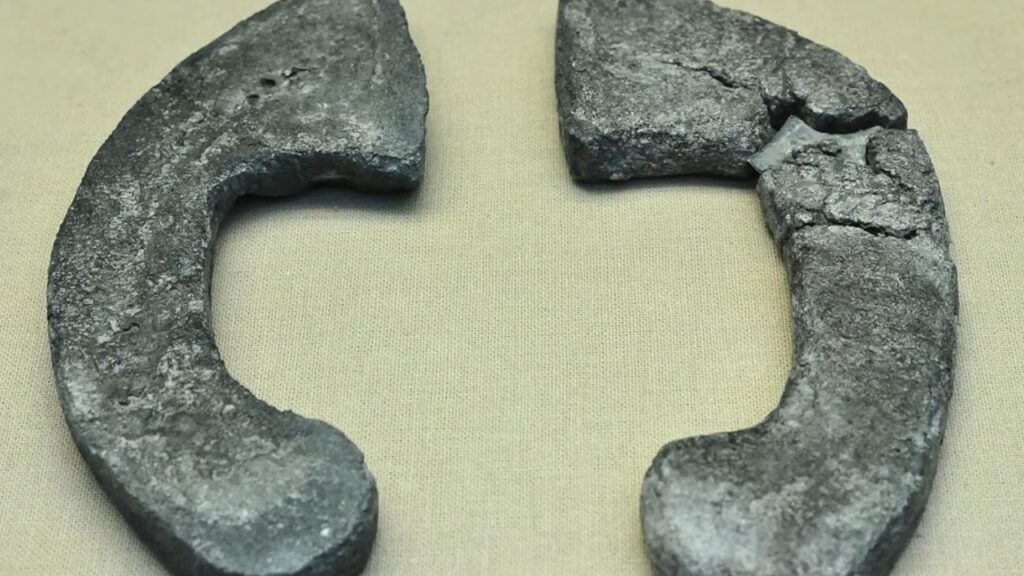
Ancient Greek athletes used weights called halteres, particularly in jumping. We have physical and artistic evidence for them. A fifth-century BCE drinking cup in The Metropolitan Museum of Art, for example, shows an athlete holding halteres while training.
The shape could vary, and these objects were not simply ancient versions of the rubber hex dumbbells in your local gym. Their purpose and sporting context were different too.
Did you know? Ancient athletes using weights and eighteenth-century English people using “dumb bells” are two separate parts of strength-training history. The older Greek weights explain how long humans have trained with resistance. They do not explain where the English word came from.
Three different things are easy to mix together
A lot of confusion disappears once you separate the equipment from the name. People had weighted objects thousands of years ago. English exercisers later used silent bell-like machines. Eventually, the dumbbell name became attached to portable hand weights.
| Equipment | Period | What it was used for |
| Greek halteres | Ancient Greece | Handheld athletic weights, including use in jumping |
| Early dumb bell | Documented by 1711 | Indoor exercise using a silent bell-like mechanism |
| Handheld dumbbell | Later 18th century onward | Portable resistance training |
The table is also why I would be careful with claims that the dumbbell itself was “invented” in 1711. That is stronger than the evidence allows. What we can say confidently is that the term was already being used for exercise equipment by then.
The funny part is that the basic idea has barely changed
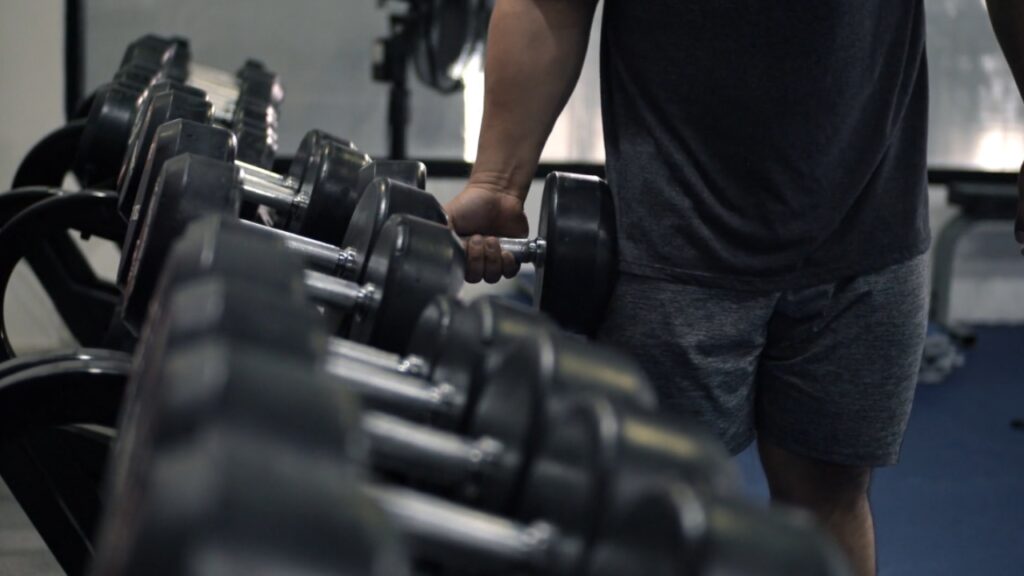
Strip away the ropes, bells and eighteenth-century machinery, and you get something I still spend half my working day telling people: resistance does not need to be complicated.
The old dumb bell gave someone resistance through a repeated pulling movement. A modern dumbbell gives you a load you can press, row, squat, carry, curl or raise. The equipment is completely different, but the useful part is still the same. Your muscles have to produce force against something.
I see people training at home get hung up on this all the time. They think they need a room full of machines before a workout becomes “proper.” You really do not. Give me a sensible plan, enough room to move, and one or two dumbbells, and there is plenty we can work with.
For a bedroom or a small apartment, my small home gym ideas show how to make the most of that setup.
If you want to put that idea into practice, start with my home gym setup guide before you spend money on more weights.
Heavy dumbbells can leave permanent marks on a bare concrete floor if you drop them. A proper garage gym flooring setup helps protect the surface before your home workouts become heavier.
In that sense, the history feels surprisingly familiar.
A pair of dumbbells still solves a lot of problems

There is a reason these things survived while thousands of stranger exercise inventions disappeared. Dumbbells are simple to understand and unusually easy to adapt.
If I am coaching somebody and the planned exercise does not suit them that day, dumbbells give me options. We can change the load, range of motion, stance, or exercise without changing the whole session.
- A goblet squat can train the legs without needing a squat rack.
- A one-arm row needs little more than a weight and something stable for support.
- Floor presses work when there is no bench available.
- Loaded carries turn a very simple weight into a whole-body exercise.
None of that means dumbbells are magically better than barbells, machines or bodyweight training. They are just useful. More than three centuries after Addison was exercising with his silent machine, that may be the nicest connection between his dumb bell and ours.
Next time you pick one up, the name will make more sense
@physicalculturehistorian What’s in a name? #dumbbell #history #edutok #knowledge #whatisinaname #whyisitcalled #exercise #themoreyouknow #1800 ♬ original sound – Ben & Bron
So when somebody at the gym asks why we call it a dumbbell, you can give them the short version.
I still find that slightly ridiculous in the best possible way. An object we use for split squats, presses, and curls carries a name left over from a machine built to imitate ringing a bell without actually ringing one.
And now I know that I am probably going to think about church towers every time somebody leaves the dumbbells scattered across my gym floor.