
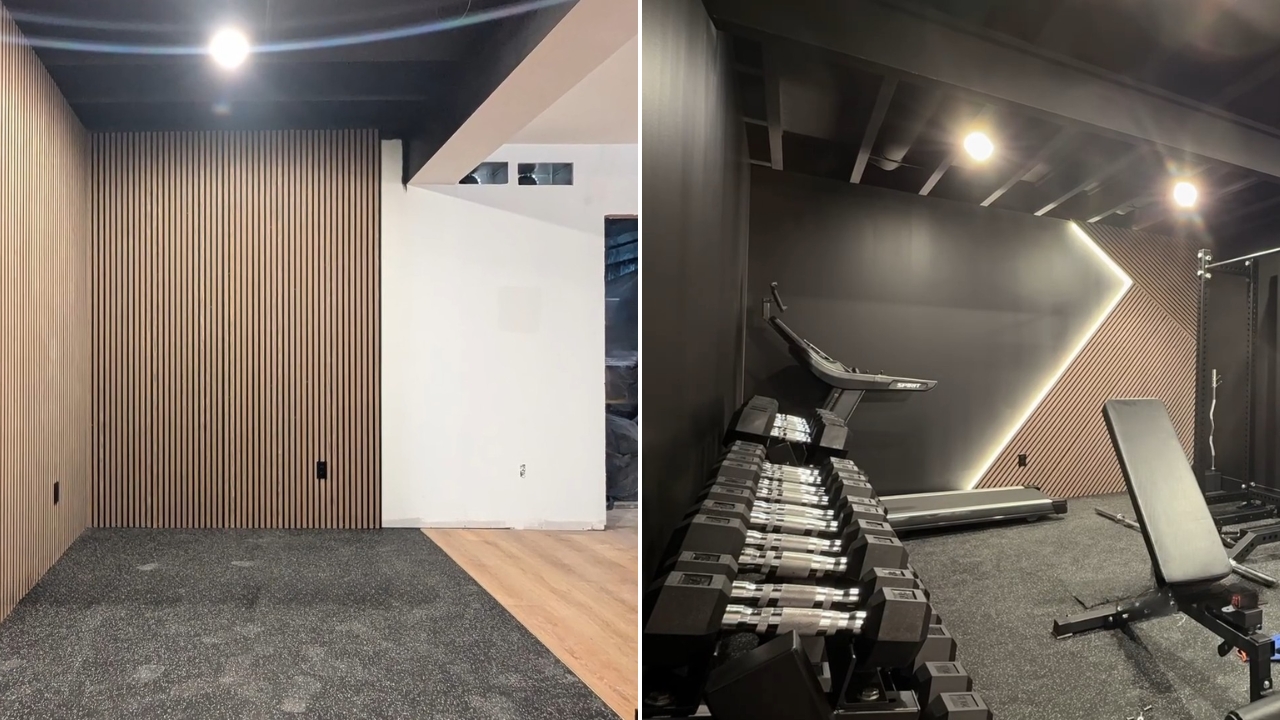
When someone tells me they want a home gym, I do not ask what they plan to buy.
I ask which room they will still walk into on a wet Tuesday in February, with football on TV and the sofa looking better than the dumbbells. I have lost that argument with myself more than once, so I trust the question.
Most home gym setup mistakes I see come from doing things in the wrong order. A rack arrives before anyone has measured the ceiling.
Foam tiles go down, and a dumbbell goes straight through them. So I plan a home gym setup the way I plan a session, and if you are working out how to build a home gym, the order below will save you more than any single purchase.
Start Your Home Gym Setup With the Room You Will Use
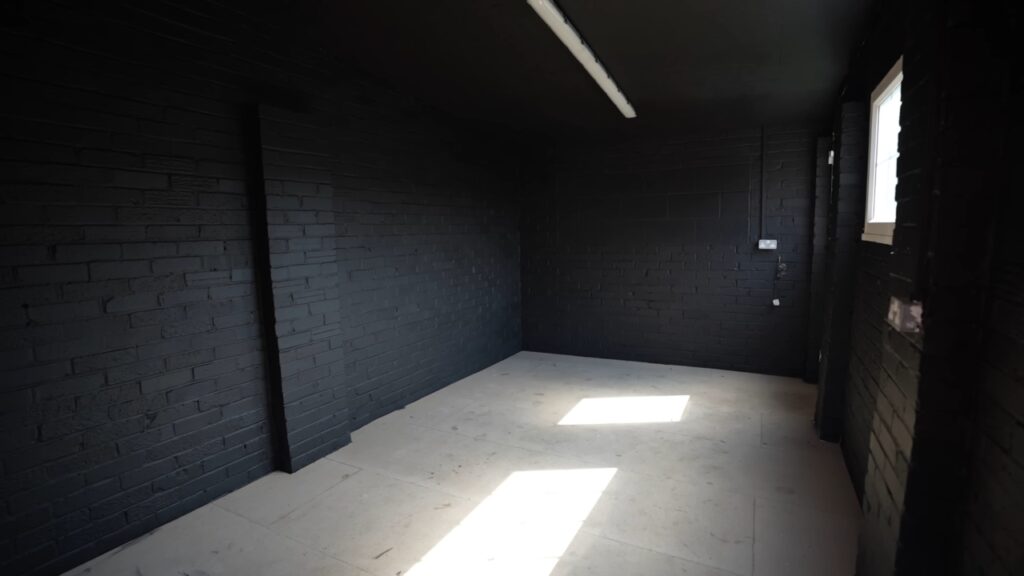
The best room for a home gym setup is the one with the fewest excuses. Think about how far it is from the sofa, how cold it gets in winter, and whether equipment can stay out between sessions.
A Corner of a Bedroom or Living Room
A corner home gym setup works well for dumbbells, bands, and body weight. You need the length of a yoga mat and room to stretch your arms out, which makes a corner a natural fit for a minimalist home gym.
Hooks and a narrow shelf keep the floor free, and that is how a small corner gym survives in a room with another job. The home gym storage ideas further down help here too.
An Apartment
An apartment home gym setup has to account for the neighbor below. Jumps and dropped weights travel through floors, so choose slow squats over jump squats and lower dumbbells onto a bench.
Timing helps too, and keeping an apartment gym quiet is much easier while the people below are awake.
A Garage
A garage gives you a concrete floor and room to drop a barbell, along with cold, heat and a car. The CDC says never to run a car in an attached garage, even with the door open, so warm it up outside.
How much floor is left once the car is parked decides the plan, since a well-planned garage gym can be one wall or the entire bay.
A Basement
Basements are quiet, but they are often damp, dark and low. Test for radon first. The EPA advises retesting when you start living on a lower level of the home, and I would treat a basement gym the same way.
After that, a dehumidifier and brighter light do most of the work of turning it into a basement training room.
Measure the Floor, the Walls and the Ceiling
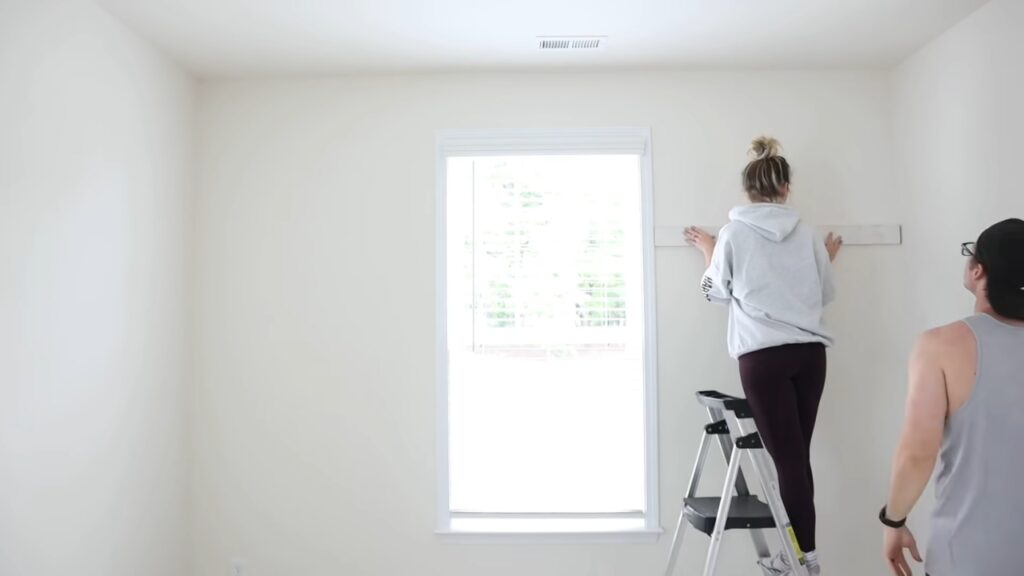
Measure the room before you shop for your home gym setup, and use your body as well as a tape. Lie down where the bench will go, stretch your arms out, and step back into a lunge. If you hit a wall or a radiator now, you will hit it with weights in your hands too.
Ceiling height is where most home gym setup plans fall apart. Hold a broom handle overhead with straight arms, measure to the top of it, and compare that with the lowest point in the room, which is often a beam, a duct, or a garage door track.
Write these down before you buy anything.
- Floor length and width
- The lowest overhead point
- Your overhead reach
- Door widths on the way in
- Power outlets for any machine
A full-length Olympic barbell is a little over seven feet long, so if the room cannot fit one with space to load both ends, build your home gym setup around dumbbells. On an upper floor, check with a builder before a rack goes in.
Set a Budget in Stages
Part of learning how to build a home gym is accepting that you do not need it all at once. Buying in stages lets your home gym setup grow around what you actually use, not what looked good in a video.
The first stage covers the floor and enough equipment for a full-body session. Later stages add load and variety once the habit is there.
| Stage | When | What it usually covers |
| 1 | Before the first session | Flooring for the training area, a mat, one pair of dumbbells or adjustable dumbbells, resistance bands |
| 2 | After a month or two of steady training | Heavier or adjustable weights, a sturdy bench, a kettlebell, basic storage |
| 3 | Once you train most weeks and know your gaps | Rack and barbell, a cardio machine, a mirror, better lighting |
Prices move too fast for me to promise figures in a guide like this one. Used dumbbells and mats hold up well, so comparing what each stage of a home gym actually costs new and second-hand can stretch the same money a lot further.
A minimalist home gym can stay in Stage 1 for months without missing much.
My own rule is that the floor gets paid for before anything shiny. A cheap dumbbell on a good floor is fine. An expensive dumbbell on a bare floor ends in a cracked tile or a chipped slab.
Put the Flooring Down First
View this post on Instagram
Most advice on how to build a home gym puts flooring near the end of the list. I put it first, because moving a loaded rack to lay mats is a job nobody enjoys twice.
The right surface depends on what you will do on it:
- Floor work, stretching, and core exercises need something comfortable to kneel and lie on.
- Dumbbells need a surface that survives the occasional drop.
- Barbell lifting needs dense rubber that protects whatever lies underneath and does not squash under your feet.
In a garage, protecting a concrete garage slab from dropped weights matters as much as protecting the lifter, because a cracked slab is a far bigger repair than a worn mat.
Indoors, choosing home gym flooring for each kind of training often means two surfaces in one room, rubber where the weights land and something softer where you kneel and lie down.
Horse stall mats come up in almost every conversation about cheap rubber, and whether they are worth it for a home gym depends mostly on how heavy you lift and whether you can carry and cut them in your space.
A Short List of Core Equipment
People asking me how to build a home gym usually expect a long shopping list. A pair of dumbbells can do more than most of them think. With dumbbells, a mat, and something sturdy to sit or lie on, you can train every major muscle group.
The core of a beginner home gym setup looks like this list, and I add the rest only when a real gap appears. That short list is a minimalist home gym in its own right.
- Dumbbells, adjustable if space is tight, or one fixed pair you can use for most exercises
- A mat for floor work and stretching
- A set of resistance bands for rows, presses, and warm-ups
- A flat bench or sturdy step for rows, presses, step-ups and split squats
- A kettlebell, once you want to swing, carry or squat with something heavier
A power rack, barbell and plates make sense once you train regularly and your home gym setup has the ceiling height, floor and budget for them. A treadmill, bike or rower can wait, too.
I like cardio machines, but most people can raise their heart rate with intervals, loaded carries, or a brisk walk outside while they decide which machine they would actually use.
Plan the Layout Before Anything Heavy Arrives
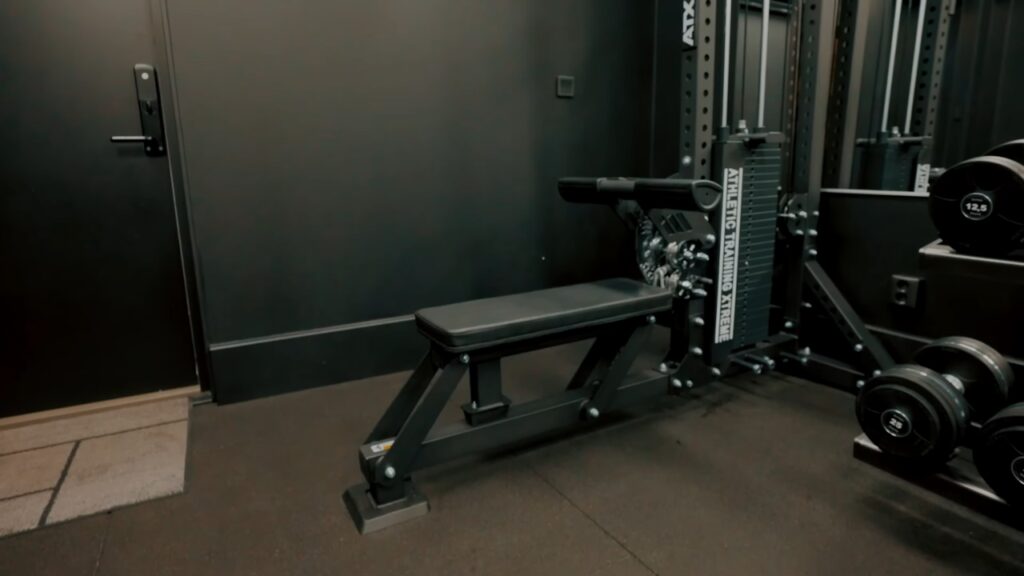
Sketch your home gym setup on paper first. Keep a clear path from the door, put heavy items against the walls, and leave the middle of the room empty for lunges and swings. Mark your home gym storage ideas on the sketch too, because hooks and shelves use wall space quickly.
With children or pets at home, a treadmill needs extra care. In May 2021, the U.S. Consumer Product Safety Commission announced a recall of the Peloton Tread+ after 72 reports of people, pets, or objects being pulled under it, including a six-year-old who died.
I give the same advice for any treadmill. Keep the area behind it clear and unplug it when you finish.
Lighting and a Mirror
Light changes how a home gym setup feels. One bare bulb makes a room feel like storage. Put bright light over the lifting area and softer light where you stretch. Good home gym lighting also comes from more than one source, so your own shadow never covers the plates you are loading.
A mirror is useful, but the research on it is mixed. In one McMaster University study, inactive women who cycled in front of a mirror felt less energized afterwards. A later study of a step aerobics class found no difference in how anxious the women felt.
A side view shows the depth of a squat and the angle of your back, but a well-placed home gym mirror still cannot tell you everything about your form, so filming a set from the side now and then is worth the effort.
A Minimalist Home Gym That Still Works
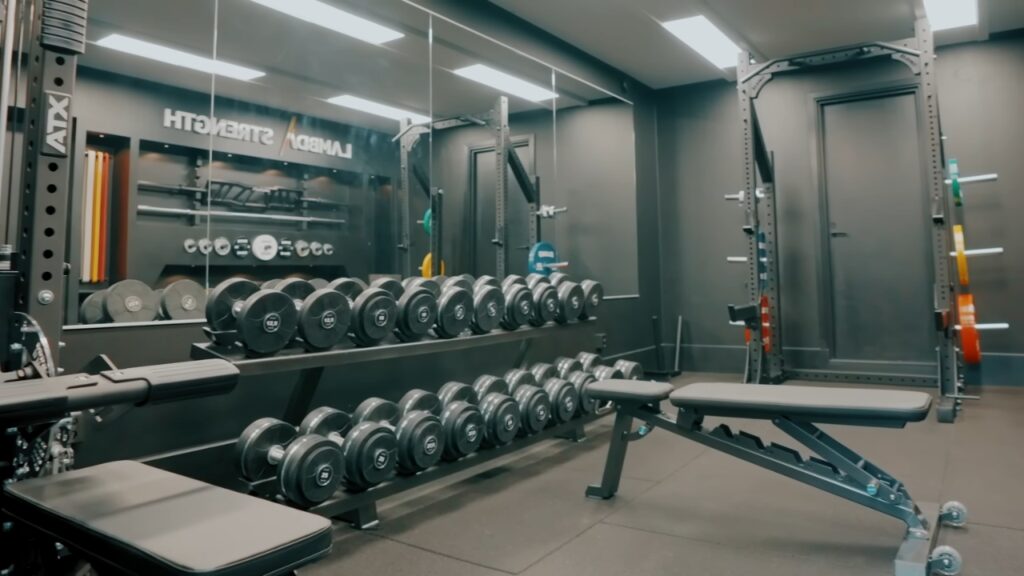
A minimalist home gym is not a lesser version of a full one. A mat, adjustable dumbbells, and a set of bands cover most of what a beginner needs for months.
If you are working out how to build a home gym on a small budget, start here, and with the home gym storage ideas below, the whole kit fits in one closet.
Pick exercises that do several jobs, like goblet squats, single-arm rows, and split squats. When the weights feel light, slow down the lowering phase or add a pause before you buy heavier ones. That keeps a minimalist home gym useful for much longer.
Home Gym Storage Ideas That Keep the Floor Clear
Clutter is a safety problem in a small room. A band left on the floor or a dumbbell parked by the door becomes something to trip over in the middle of a lunge.
The best home gym storage ideas follow one rule. Everything has a place off the training floor, and it goes back there at the end of each session. Most home gym storage ideas cost very little, and the cheapest ones are often the most useful.
- Wall hooks for bands, jump ropes, and suspension straps
- A low, sturdy rack or shelf for dumbbells and kettlebells, so heavy items stay near the floor
- A storage bench or ottoman for mats, foam rollers and smaller items
- Plate pegs on the wall or a plate tree beside the rack, if you train with a barbell
- A basket by the door for the small things you use every session
In a shared room, storage decides whether a home gym setup survives at all. If the equipment can disappear in two minutes, the room stays a living room, and nobody asks for the corner back.
I would rather see someone use a closet and three hooks well than buy a large storage unit that swallows half the training space.
Your First Workout in the New Space
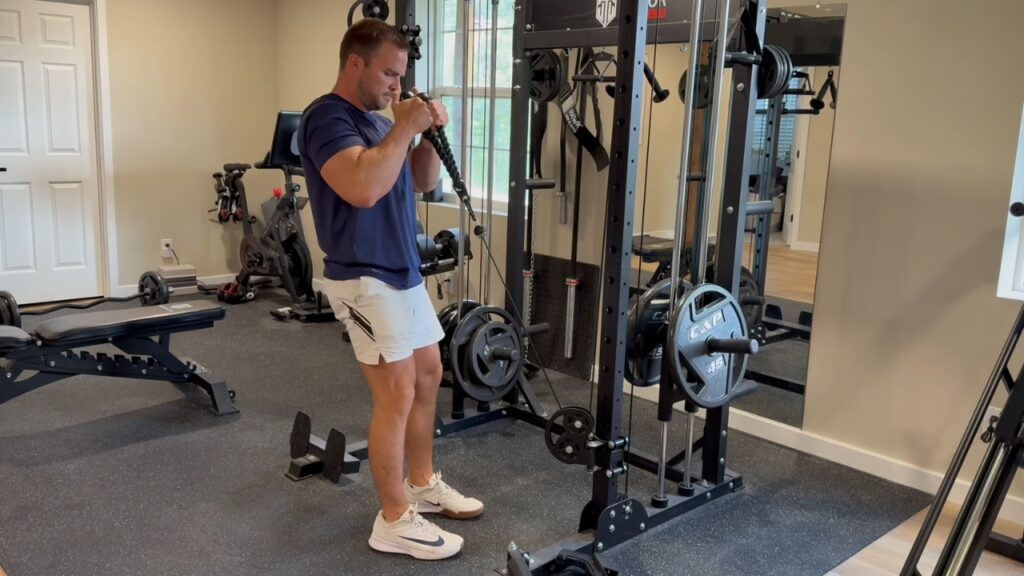
Once the floor is down and the equipment has a home, train in the space before you add anything else to your home gym setup. The first session tells you more about the room than any plan. You will find the spot where the ceiling feels low, the corner where the light is poor, and the door that swings into your lunge.
The CDC recommends that adults do muscle-strengthening activity on at least two days a week, working all major muscle groups, alongside 150 minutes of moderate aerobic activity.
The final step in how to build a home gym is using it, and I start most people with a full-body dumbbell session like the one below.
- Five minutes of warm-up with marching, arm circles, bodyweight squats, and band pull-aparts
- Goblet squat to a bench or box, 3 sets of 8 to 10 reps
- One-arm dumbbell row with a hand on the bench, 3 sets of 8 to 10 reps on each side
- Push-up with hands on the bench or a kitchen counter, 3 sets of as many clean reps as you can
- Dumbbell Romanian deadlift, 3 sets of 8 to 10 reps
- Split squat, holding the bench for balance if needed, 2 sets of 8 reps on each side
- Dead bug or plank, 3 short sets
Choose weights that leave two or three good reps in reserve on each set. If an exercise feels wrong in your body or does not fit the room, keep the goal and change the exercise.
A step-up can replace the split squat. A floor press can replace the push-up if your wrists complain.
At the End
@jadelynoverton Let the BEST series begin !!! So happy to share this new journey with you guys. Comment you’re favorite gym equipment if you have a home gym too! #couplegoals #couplestiktok #homegym #newhouse #gymcommunity @RitFit ♬ original sound – Jade Lyn & Ty
Before your second session, write down what got in the way during the first one. Maybe the light was poor, the floor felt hard, or the dumbbell was too light by the third set. Fix the top item on that list before you buy anything new.
I keep the same kind of list myself, in the notes app on my phone, somewhere between recipes I want to cook and the next training idea I want to try on myself.
Most of the home gyms I have helped people put together grew the same way, one real problem at a time, from a mat and a single pair of dumbbells.
That first list is also my favorite part of the job, because what bothered someone in session one usually tells me more than any plan they bring.