
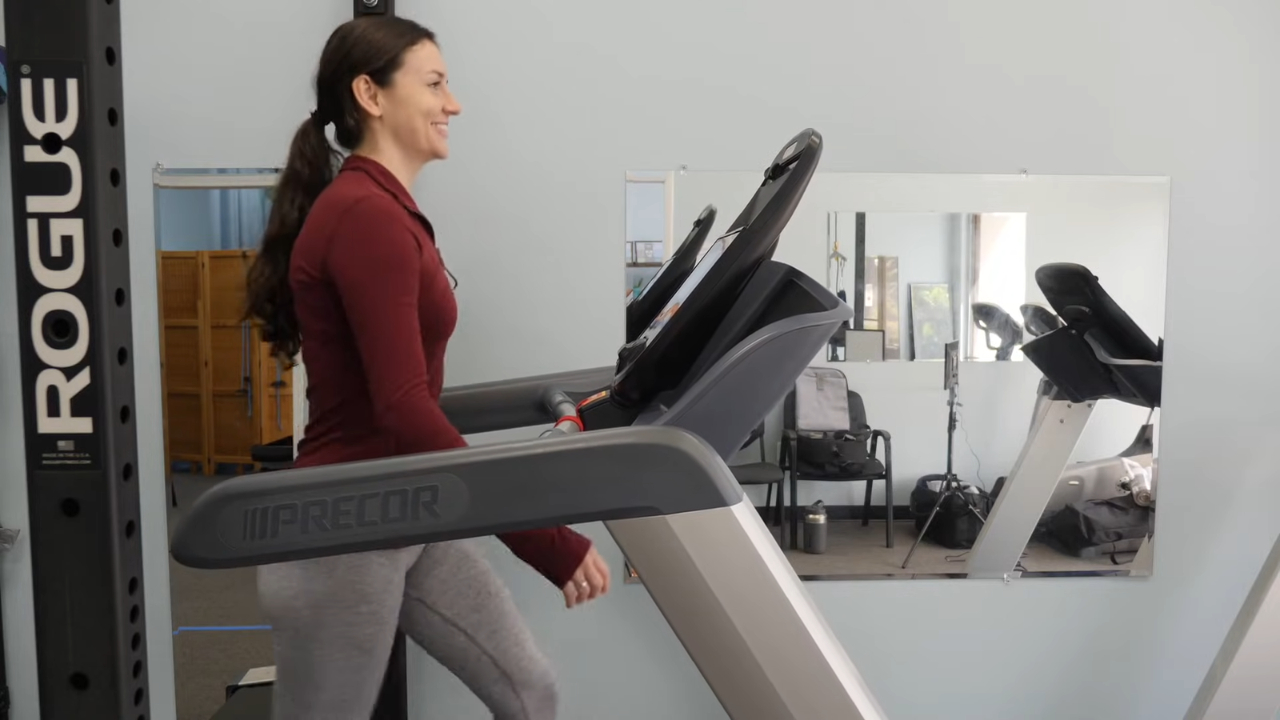
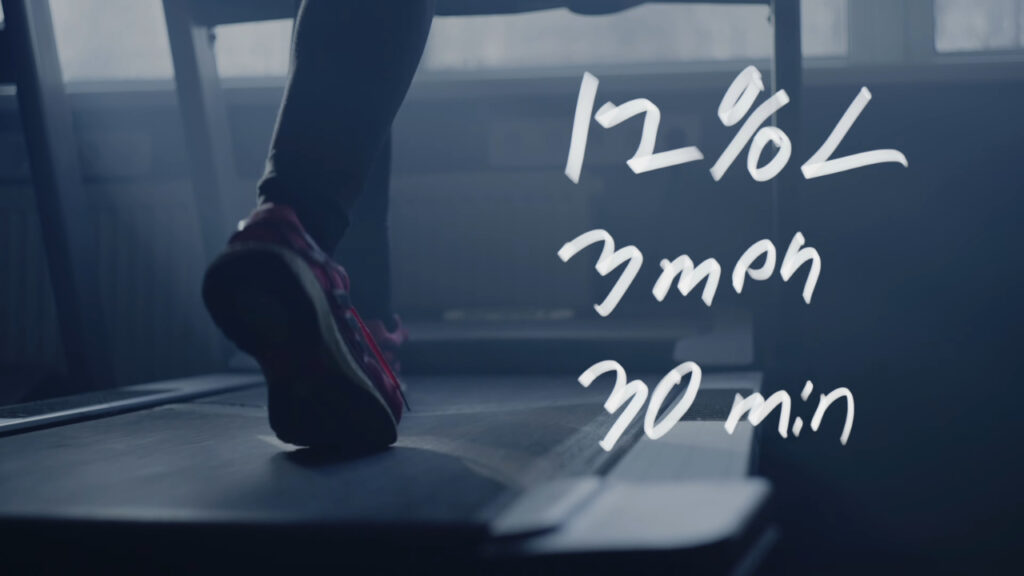
Set a treadmill to 12% incline, 3 mph, and 30 minutes. Sounds manageable, right? You’re only walking, after all. Give it five minutes, and your calves might have a different opinion.
Known as the 12-3-30 workout, this straightforward routine became a social media phenomenon after fitness influencer Lauren Giraldo shared her preferred treadmill settings.
No complicated training plan, expensive equipment, or exercise combinations required. Just three numbers and a fairly steep hill that never ends.
Part of its success comes down to something coaches see all the time. People often struggle more with sticking to a workout than finding exercises that work. A simple routine removes some of that decision-making, leaving more energy for actually training.
But does 12-3-30 deliver enough benefits to justify its popularity, or is it another fitness trend with good marketing?
How Lauren Giraldo Made 12-3-30 Famous
Lauren Giraldo wasn’t trying to invent a new training method. She wanted a cardio routine she could follow consistently without running.
After experimenting with treadmill settings, she settled on a combination that felt challenging but achievable. Her formula was straightforward:
- 12 – Set the treadmill incline to 12%.
- 3 – Walk at 3 mph (4.8 km/h).
- 30 – Continue walking for 30 minutes.
Giraldo first shared the routine on YouTube in 2019. Wider attention followed in November 2020 when she posted about it on TikTok, where millions of people encountered her approach to treadmill training.
During a 2025 interview with Good Morning America, Giraldo explained that she developed the combination through trial and error after finding traditional gym workouts intimidating. Her 2020 TikTok video, in which she credited the routine with helping her lose 30 pounds, received more than two million likes.
Her personal results helped attract attention, but they aren’t a guarantee of similar results for everyone.
What really made 12-3-30 stick was its simplicity.
Give people three numbers they can remember between sets, and you’ve already made the workout easier to follow. Nobody needs to remember an interval sequence or constantly adjust the machine.
Social media did the rest. People started sharing their attempts, progress updates, and modified versions. Before long, an ordinary treadmill session had become a recognizable fitness trend.
Why the 12-3-30 Workout Actually Works
Walking uphill requires more effort than walking on flat ground at the same speed. Your heart works harder, your breathing increases, and your leg muscles have to produce more force to keep you moving.
At a 12% incline, every 100 feet of horizontal travel corresponds to approximately 12 feet of elevation gain. Unlike the incline percentage, which describes the slope, the treadmill’s speed determines how quickly you’re covering distance.
More Work for Your Legs and Cardiovascular System
Walking uphill recruits muscles throughout your lower body, particularly the glutes, calves, quadriceps, and hamstrings.
A 2011 biomechanics study examining walking speed and incline found that uphill walking significantly increased muscle activation compared with level walking. Researchers observed greater activity in several hip, knee, and ankle extensor muscles as the slope increased.
Your calves will probably notice before you finish reading the treadmill display.
Cardiovascular fitness is another benefit. Maintaining an uphill walking pace raises your body’s oxygen requirements, giving your heart and lungs a meaningful training stimulus.
Running isn’t compulsory for improving endurance. A challenging walking session can do plenty of useful work.
How Much Exercise Do You Actually Get?
One full 12-3-30 workout covers approximately 1.5 miles (2.4 km), assuming you maintain the prescribed speed throughout.
Here’s what that adds up to over a typical training week:
Weekly sessions
Total walking time
Approximate distance
2 sessions
60 minutes
3 miles (4.8 km)
3 sessions
90 minutes
4.5 miles (7.2 km)
5 sessions
150 minutes
7.5 miles (12.1 km)
Five weekly sessions provide 150 minutes of exercise, although the actual intensity depends on individual fitness.
According to the CDC’s physical activity recommendations, adults should aim for at least 150 minutes of moderate-intensity aerobic activity or 75 minutes of vigorous activity each week, alongside muscle-strengthening work on at least two days.
Move.
Your.
Body.It doesn’t matter how you move or how fit you are. When it comes to your health and wellbeing, Every Move Counts. #BeActive! https://t.co/yUdeDMwFnm
— World Health Organization (WHO) (@WHO) March 29, 2023
Incline walking can contribute to those targets. However, completing 30 minutes doesn’t automatically make a session moderate intensity for every person.
What About Weight Loss?
Incline walking increases energy expenditure compared with flat walking at the same speed. That can support weight management, particularly when paired with suitable eating habits and consistent activity.
However, 12-3-30 doesn’t guarantee fat loss.
Body weight, fitness, food intake, total daily movement, and training frequency all influence the outcome. A treadmill’s calorie display is also an estimate rather than an exact measurement.
Strength training still has its place. Walking uphill challenges your legs, but it doesn’t provide the same progressive resistance needed to build strength throughout your body.
Keep lifting if strength and muscle development matter to you. Add incline walking as cardio rather than expecting it to replace everything else.
How to Start 12-3-30 Without Overdoing It
Don’t start at 12% incline just because that’s what the workout says. Your calves, Achilles tendons, and cardiovascular system need time to adjust, especially if you’ve been away from regular exercise.
Even Giraldo admitted that she initially struggled to complete 30 minutes without stopping.
Start at a level you can handle while keeping your walking technique consistent.
Level
Incline
Speed
Duration
Beginner
3-5%
2.5 mph (4 km/h)
15-20 minutes
Intermediate
6-9%
2.5-3 mph (4-4.8 km/h)
20-25 minutes
Full workout
12%
3 mph (4.8 km/h)
30 minutes
Treat these settings as starting suggestions, not mandatory fitness levels.
Build Up One Setting at a Time
Start with two sessions per week, allowing recovery time between them. A simple approach looks like this:
- Warm up for 5 minutes. Walk on a flat or gently inclined treadmill before increasing the slope.
- Choose a manageable incline. Start at 3-5% if you’re new to uphill walking, adjusting lower if needed.
- Maintain an upright posture. Look forward, keep your shoulders relaxed, and avoid leaning heavily on the handrails.
- Monitor your effort. Aim for a pace that feels challenging but controlled. Slow down if you’re struggling to maintain your walking form.
- Cool down gradually. Lower the incline and walk comfortably for another 3-5 minutes.
Repeat those settings until you can complete the session without losing your rhythm. Then increase either the incline, speed, or duration, not all three together.
For example, imagine someone returning to exercise after two years away. Starting at 12% incline might leave them exhausted after eight minutes.
A better option would be 15 minutes at 4% incline and 2.5 mph. Once that becomes comfortable over several sessions, they could extend the duration to 20 minutes before increasing the slope.
Progress is still progress, even when your treadmill display doesn’t match a TikTok video.
Watch Your Walking Technique
One common problem deserves particular attention: holding onto the handrails.
If you’re leaning backward and supporting your body weight with your arms, you’re changing the workload. You’re no longer doing the same uphill walk that the treadmill settings suggest.
Lower the incline until you can walk naturally without relying on the rails for support.
Pay attention to persistent calf tightness, Achilles discomfort, or pain around your knees. Increasing the slope changes how your muscles and joints handle each step, and more incline isn’t automatically better.
Stop if you experience sharp pain, dizziness, or chest discomfort. Anyone managing cardiovascular conditions, significant joint problems, or other medical restrictions should seek appropriate medical advice before attempting a demanding routine.
No treadmill capable of reaching 12%? Use the highest manageable incline available, or find a suitable outdoor hill.
Limited space doesn’t rule out regular training, either.
Plenty of small home gym ideas work with basic equipment and a corner of a room, even without a treadmill.
Three Numbers Aren’t the Whole Plan
View this post on Instagram
Pick two days this week when you can fit in a treadmill session.
Start at an incline that allows you to walk comfortably, choose a sustainable speed, and record three things afterward: your settings, your total walking time, and how hard the session felt on a scale of 1 to 10.
Repeat the same workout during your second session. Compare your effort before changing anything.
If both sessions feel manageable, you have a starting point for the following week. If they’re too demanding, reduce the incline and try again.
No extra equipment required. No complicated training schedule to memorize.
The clever part of 12-3-30 isn’t the exact numbers. It’s having a workout simple enough to remember and useful enough to repeat.