
A while ago I added rowing intervals to my week, twice a week, mostly to understand why my members kept talking about the rower.
Around the third session, sitting at the catch and waiting for my breathing to settle, I looked down at the chain and thought it looked a lot like a bike chain.
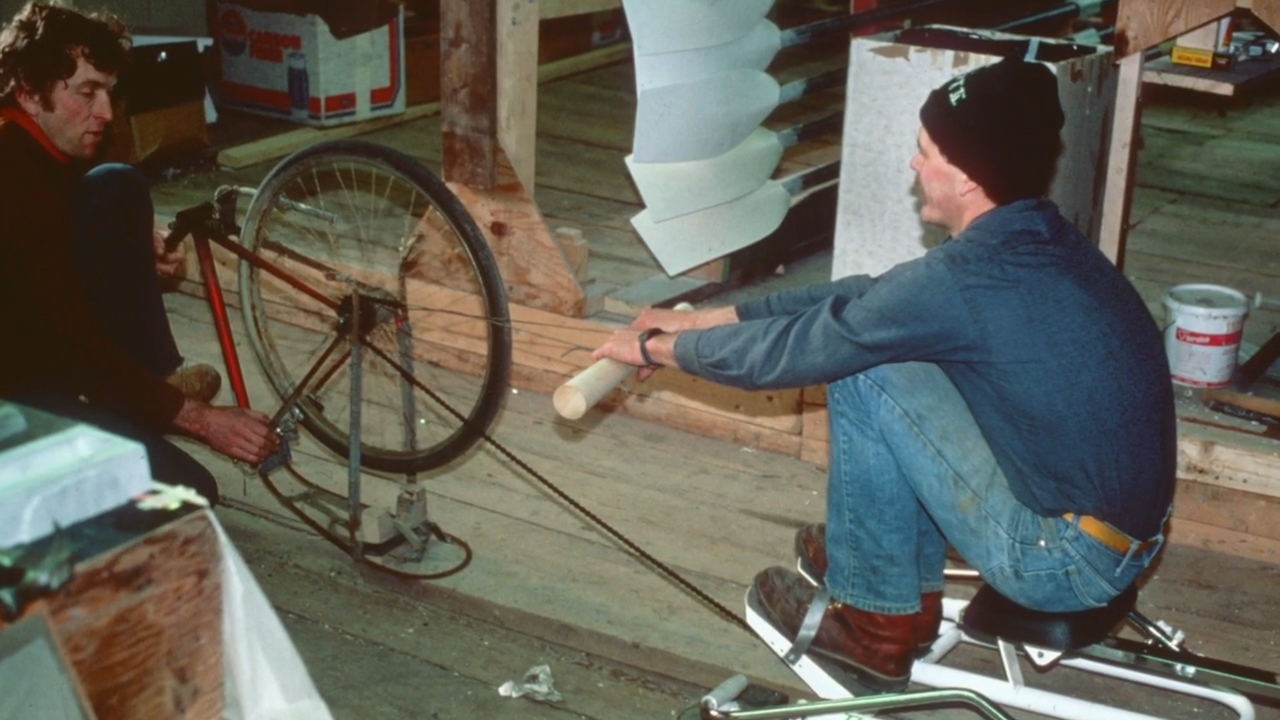
I was closer than I knew. The Concept2 rower began in early 1981, when Peter Dreissigacker fixed his old bicycle to the floor of a Vermont barn and pulled on the chain.
I still teach beginners to push with their legs before pulling with their arms, because the whole idea behind that barn prototype was to reproduce the feeling of a rowing stroke. I also remind them to let the flywheel keep spinning between strokes instead of rushing the recovery. And when someone turns the damper up to 10, I bring it back to 4 and explain that pulling harder is not the same as choosing a heavier setting.
Two Oar Makers Looking for a Way Through Winter
Dick and Peter Dreissigacker were rowers and engineers before they built any exercise machine. While training for the 1976 Montreal Olympic trials, they made carbon fiber oars in a California apartment kitchen.
According to Vermont Magazine’s profile of the company, their composite oar weighed about 5 pounds. The roughly 15-pound figure for a wooden oar is my own comparison and is not from that profile.
Neither brother made the Olympic team. Their oars got attention anyway, so in November 1976 they bought an abandoned dairy farm in Morrisville, Vermont, and turned the barn into a workshop. By 1980, eight people worked there.
Vermont gave them cheap space and a long winter. Rivers freeze, oar orders slow down, and rowers lose months of water time. Anyone who follows football knows what a lost pre-season does to a team, and rowers felt that every January.
What Happened on the Barn Floor in 1981
View this post on Instagram
In early 1981, Peter took his old bicycle, fixed it to the barn floor and pulled on the free end of the chain. A 2007 account in Stanford Magazine says the brothers nailed the rear wheel down.
Judy Geer, who joined the company in 1983, described the bike to VTDigger in 2019 as turned upside down and nailed to the floor.
The pull felt heavy at the start and quicker toward the finish, much like a stroke on the water. They tied a handle to the chain, built a frame around it, and added a sliding seat.
Confirmed fact and retold detail are not quite the same here. Concept2 itself says Peter attached or mounted the bicycle to the floor.
The word “nailed” comes from interviews and later retellings. The bicycle, the barn and the year 1981 appear in every account.
Why a Bike Wheel Felt Closer to Rowing Than Older Machines
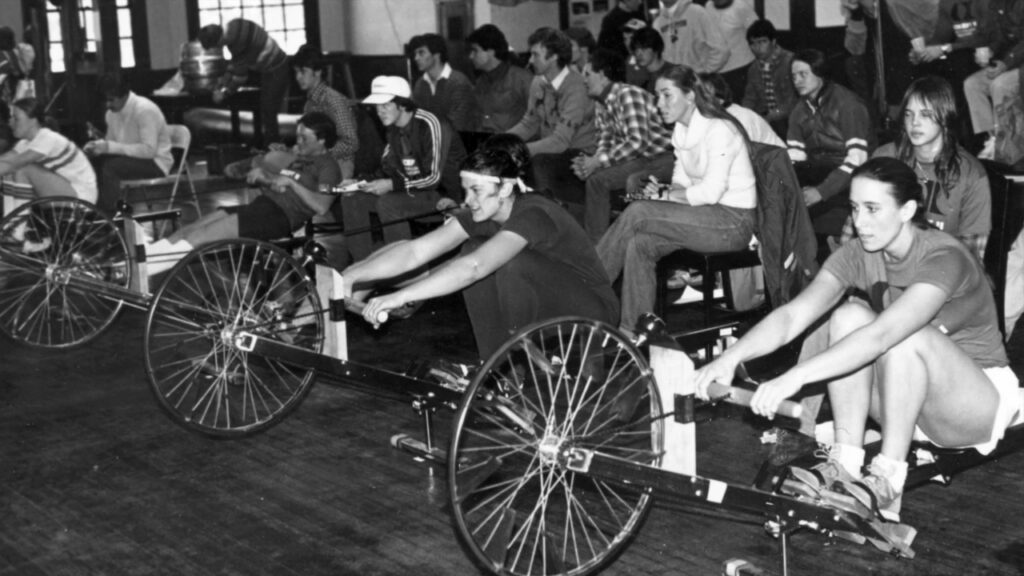
Rowing machines already existed in 1981. Geer told VTDigger they were big and clunky, and that the barn design became the first rower to use an air-resistance flywheel instead of pistons.
She added that the brothers also wanted winter work for their staff, when oar orders dropped.
From a coaching point of view, three things made the wheel a smart choice.
- The drive feels heaviest at the catch and lighter as the handle speeds up, the way a blade loads and then runs through the water.
- Air resistance grows as you pull harder, so a beginner and an Olympian can share one machine.
- A wheel keeps spinning between strokes, which gives the recovery a natural rhythm instead of a dead stop.
A Bicycle Speedometer Turned Training Into a Sport
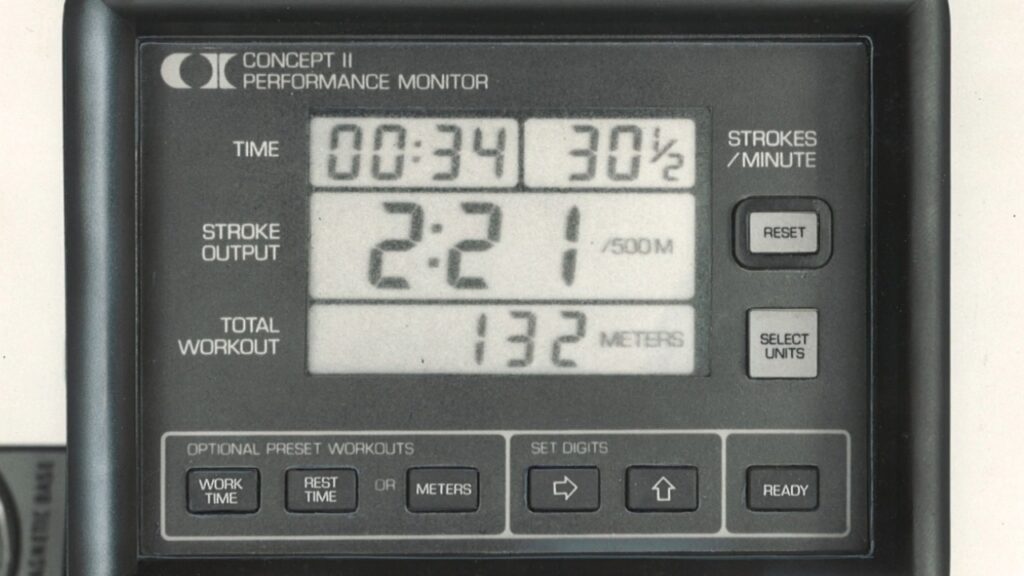
The Model A went on sale in the fall of 1981. A Concept2 blog post from December 2025 puts its price at $600, at a time when competing machines cost about $3,000.
Stanford Magazine points to one feature Peter added almost as an afterthought: a bike speedometer showing speed and distance.
Once rowers could see a number, they started racing for it. I see the same thing on the gym floor every week. Put a screen in front of someone and the third interval is suddenly faster than the first.
Here is an illustrative training log from September 2026, not a benchmark for anyone else. Two sessions a week, with 500 m interval splits improving from 2:14 to 2:09. By session three, the 10-minute distance was 2,180 m, followed by a 2,000 m time of 8:32.
Those numbers give you something useful to compare. You can see where your pace drops, how well you hold it across intervals, and whether the next session is actually better. That is what makes the monitor useful for coaching, even when nobody is trying to race.
Did you know? In 1982, a Boston club of Olympic and national team rowers called the Charles River All-Star Has-Beens held the first indoor rowing championship at the Newell Boathouse at Harvard. The brothers trucked six machines down from Morrisville, and the winners took home claw hammers.
How the Barn Machine Grew, Year by Year
The company timeline and the reporting above give a clear order of events from farm to factory.
| Date | What changed |
| November 1976 | The brothers buy a dairy farm in Morrisville and start making oars |
| Early 1981 | The bicycle prototype goes on the barn floor |
| Fall 1981 | The Model A goes on sale |
| 1982 | First indoor race, run on six machines |
| 1984 | With 12 employees, the company leaves the barn |
| 1986 | The Model B adds a flywheel cover and a Performance Monitor |
| January 1, 2025 | Ownership passes to the Concept2 Perpetual Purpose Trust |
| 2026 | The company marks 50 years |
In their 2024 conversation on How I Built This, the founders describe early sales going mostly to clubs and schools. Sales grew in the 2000s, after CrossFit founder Greg Glassman put the machines in his gyms.
The Damper Still Works Like Bicycle Gears
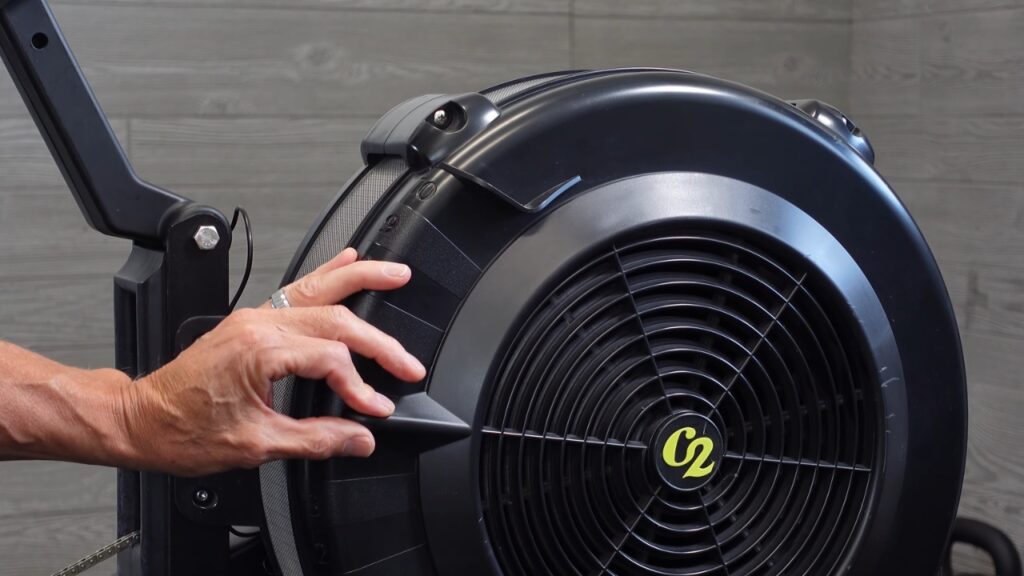
The bicycle never really left the machine. Concept2 compares its damper setting to bicycle gearing and suggests most people start between 3 and 5. A lower number feels like an easier gear.
New members often push the lever to 10 because they think it makes the workout harder. Mostly it makes each stroke heavier and slower, and in my experience the lower back complains before the legs do any real work. I move them to 4 and ask for a stronger push through the feet instead.
Drag factor is the rate at which the flywheel slows down between strokes. The monitor measures it as you row and uses it to calculate your output, so a hard pull at damper 4 counts just as fully as a hard pull at damper 10.
Will a Concept2 Rower Fit in Your Home?
The prototype had a whole barn. Most people I help have a spare room, a corner of the basement, or a garage where the car still lives. Concept2 lists these figures for the current RowErg.
- 8 feet long and 2 feet wide, with about 9 by 4 feet of space needed while rowing.
- 57 pounds with standard legs and 68 pounds with tall legs.
- Splits into two pieces without tools, with a storage footprint of roughly 25 by 33 inches.
- A seat height of 14 inches, or 20 inches with tall legs.
- Room for inseams up to 38 inches.
For a room with more than a rower, my guide on how to set up a home gym shows how to plan the floor layout before equipment arrives.
A rower also needs a stable surface, especially on a sloped garage floor. My guide to garage gym flooring explains how to check the concrete before you install rubber mats.
In an apartment, the flywheel makes a steady whoosh rather than a thud, which the neighbors below usually mind less than dropped dumbbells. If the rower is headed for the garage, Nora has mapped out garage gym ideas for every size and budget.
How I Teach a First Week on the Rower
@monroe.miller Starting the rower is harder than keeping it going. The C2 machines have a flywheel that kinda works like an old sewing machine. Once a flywheel is spinning the stored energy in the system makes it so you don’t need as much effort to keep it moving.This drag, tug, pull, method is the best way to start the rowers flywheel spinning. Give it a try!—#rowingmachine #concept2 #crossfit #conditioningtraining #gymtip ♬ original sound – Monroe Miller
The brothers kept their goal and changed the tool. Rowing on water was the goal, and an old bicycle was the swap, a lot like the way the TRX started with a jiu-jitsu belt. When a beginner sits on the rower, I keep the plan just as simple.
- On day one, learn the order. Legs, body, then arms on the drive, and arms, body, then legs on the way back, for 10 easy minutes at damper 3 to 5.
- On day two, row 5 easy minutes, rest 1 minute, and repeat three times, at a pace where you can still talk.
- On day three, row 10 steady minutes and write down the distance.
- Next week, repeat day three and try to cover a little more distance at the same effort.
A Number Worth Writing Down
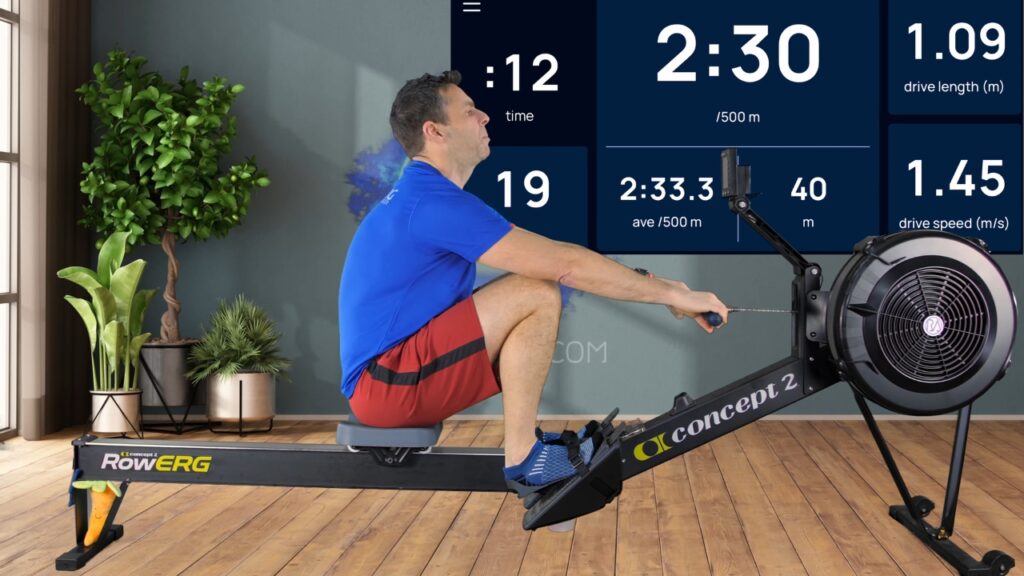
Next time you slide forward to the catch, look at the chain and the fan cage. Under the cover sits the idea Peter tested in early 1981 with a bike he no longer rode, plus a speedometer that made people race.
Once you can row 10 steady minutes, try 2,000 meters, about 1.24 miles, at a firm but controlled pace. Write the time on tape stuck to the monorail, since indoor championship heats are raced over that distance.
Row it again a month later at the same damper setting. Beat your own number, and you will see why a bicycle nailed to a barn floor ended up in gyms everywhere.